

Pre-market trading is stock trading that happens before the official market open, usually before 9:30 AM ET in U.S. markets. It is part of extended-hours trading, and it works in a thinner, less stable environment than the regular session.
That one sentence already explains why pre-market prices can be confusing. You check a stock at 8:10 AM, see it up 6%, and assume the market is already “telling the truth” about where it will open. Sometimes it is. Often, it is only showing an early reaction in a market with fewer participants, lower liquidity, and wider spreads.
That is the key idea beginners need. Pre-market moves matter, but they do not always mean what people think they mean.
A stock can jump before the bell because of earnings, economic data, analyst commentary, or overnight global news. But those moves happen before the full market is active, which means prices can be more sensitive, less reliable, and easier to misread than during normal trading hours.
What Is Pre-Market Trading?
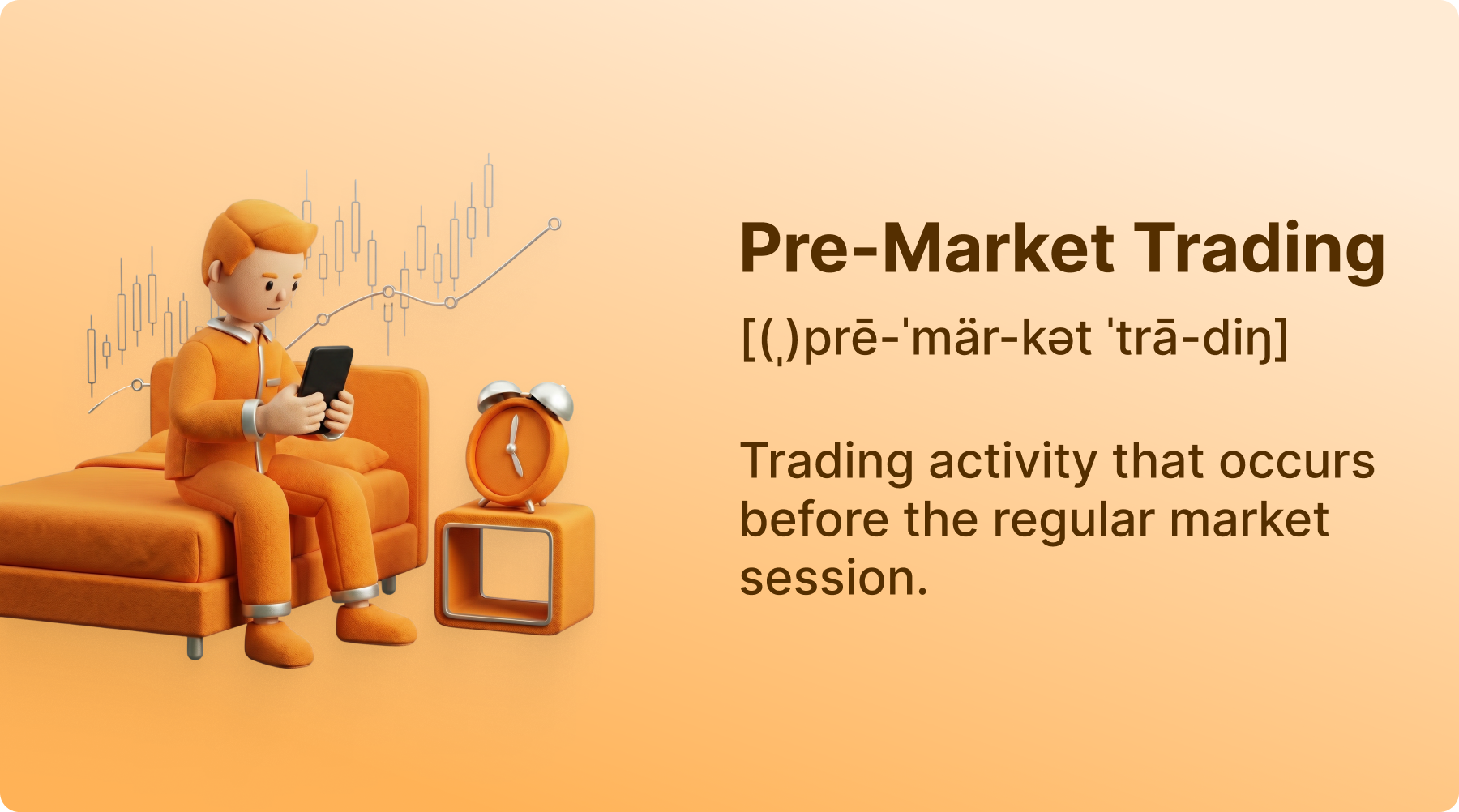
Pre-market trading refers to buying and selling stocks before the official market opening hours.
In U.S. markets, the regular session for major exchanges starts at 9:30 AM ET. Any trading before that is generally called pre-market trading. It sits inside the broader category of extended-hours trading, which includes both pre-market and after-hours sessions.
That sounds simple, but one detail matters: pre-market trading is not just “normal trading, but earlier.” The same basic market function is there — buyers and sellers matching orders — but the conditions are very different from the regular session.
If you have ever seen a stock showing a pre-market gain or loss before the opening bell, you were looking at that early session in action. The market was already reacting to new information, but in a smaller and less liquid environment.
A good plain-English definition is this:
Pre-market trading is the early session where stocks begin reacting to overnight news before the full market opens.
That is why pre-market trading meaning is really about two things:
- timing — it happens before the normal trading day begins
- market quality — it happens when fewer participants are active
That second point is the one most beginner articles skip, even though it is the part that causes most of the confusion.
What Are Pre-Market Trading Hours?
In U.S. markets, pre-market hours typically run from around 4:00 AM ET to 9:30 AM ET.
That is the usual broad window. But in real life, two things matter more than the clock itself.
Access is not always the same
Not every participant has identical access to the full pre-market session. Access can vary depending on the broker and account permissions, so some traders may only be active during part of the window.
Activity is not evenly distributed
A stock may technically be tradable at 4:15 AM ET, but that does not mean it is trading actively. In many cases, the session gets much busier closer to the opening bell, especially if there has been an earnings release or major macro news.
That means the phrase pre-market hours is useful, but it can also mislead beginners into thinking all pre-market time behaves the same. It does not. A move at 8:55 AM is often happening in a more active environment than a move at 4:20 AM.
So if someone asks what time does pre-market trading start, the practical answer is:
Usually around 4:00 AM ET, continuing until the regular market opens at 9:30 AM ET, although access and activity can vary.
How Pre-Market Trading Works
Pre-market trading usually works through electronic communication networks, or ECNs.
In simple terms, orders are matched electronically. If there is a buyer and seller willing to trade at compatible prices, the trade can happen. If there is not, the order may wait, fill only partially, or not fill at all.
That is one of the biggest practical differences from regular market hours. During the normal session, there are many more active participants. In pre-market trading, the market is usually thinner, which changes how prices behave and how orders get executed.
What that means in practice
Because there are fewer participants in pre-market trading:
- price can move more on less volume
- spreads are often wider
- orders may not fill as smoothly
- single headlines can have an outsized effect
This is why how pre-market trading works is not just a technical question. It also affects how reliable the price action is.
A stock that looks “strong” pre-market may only be reacting in a thin order book. Once regular trading begins and more participants enter, that same move may hold, weaken, or reverse.
That does not make pre-market activity useless. It just means it should be interpreted with more caution than regular-session price action.
Why Pre-Market Trading Exists
Pre-market trading exists because the market does not stop receiving information just because the opening bell has not happened yet.
Reaction to news
One of the main reasons pre-market trading exists is so the market can begin reacting to fresh information before regular hours. That can include:
- earnings reports
- economic releases
- company announcements
- analyst actions
- overnight geopolitical or global market developments
If important news appears at 7:00 AM ET, many market participants do not want to wait until 9:30 AM ET to respond.
Price discovery
Pre-market trading also helps with price discovery, which means the market starts adjusting to new information early.
This is often why a stock does not open near the previous day’s close. The repricing may already be underway in pre-market trading.
Institutional and professional use
Some institutions and experienced traders use pre-market hours because they want to respond quickly to overnight developments. They may not be trading because pre-market is “better,” but because it allows earlier reaction.
Informational value
This is the part many user-first articles should emphasize more clearly: even if someone never trades pre-market, the session can still be useful as information.
It can help answer questions like:
- Is the market reacting strongly or weakly to earnings?
- Which stocks are getting unusual attention?
- Is the overnight news moving sentiment at all?
That makes pre-market useful for context, not just for execution.
Key Differences: Pre-Market vs Regular Trading
This is the comparison most readers actually need.
| Feature | Pre-Market | Regular Market |
| Liquidity | Lower | Higher |
| Volatility | Higher | More stable |
| Participation | Limited | Broad |
| Spreads | Wider | Tighter |
This table matters because it explains why pre-market prices can look dramatic without being especially dependable.
Lower liquidity
There are usually fewer active buyers and sellers. That means it can be harder to trade smoothly and harder to trust that a move reflects broad conviction.
Higher volatility
A smaller amount of order flow can move the price more than it would during the main session. This is one reason pre-market charts often look jumpy.
Limited participation
Not all market participants are active yet. So pre-market price action may reflect a narrower slice of the market than what you see after 9:30 AM ET.
Wider spreads
The difference between what buyers are offering and what sellers are asking is often larger. That can make execution worse than many beginners expect.
If you only remember one difference, remember this: pre-market prices are real, but they are formed in a thinner market.
Risks of Pre-Market Trading
This is the section that deserves the most attention.
If someone asks is pre-market trading risky, the honest answer is yes — often more risky than regular-session trading, especially from an execution and interpretation standpoint.
Low liquidity
Fewer buyers and sellers means it can be harder to get in or out at the price you expect. Thin liquidity is not just a technical detail. It changes how reliable the market feels.
High volatility
Pre-market moves can be sharp, especially after earnings or big headlines. That can make the session look exciting, but it also makes it less forgiving.
Wider spreads
A wider bid-ask spread means there is more friction between the price buyers want and the price sellers want. That can make trades more expensive in practice.
Limited information
Sometimes the market is reacting before the full context is clear. A headline may sound positive or negative at first, but the detailed read may lead to a different reaction later.
Execution risk
Orders may not fill, may only fill partially, or may fill at less favorable prices than expected. This is especially relevant in fast-moving or lightly traded stocks.
| Risk | What It Means |
| Low liquidity | Fewer buyers and sellers are available |
| High volatility | Price can jump or drop more sharply than usual |
| Wider spreads | The bid-ask gap is often larger |
| Limited information | Early price moves may reflect incomplete interpretation |
| Execution risk | Orders may not fill the way you expect |
A lot of beginner confusion comes from focusing only on the price move and ignoring the quality of the market around that move. In pre-market trading, that quality matters a lot.
How Prices Move in Pre-Market Trading
Pre-market prices often move quickly, but not always because the move is especially “strong.” Sometimes the market is simply thin.
Prices react to fresh information
If a company reports earnings before the open, or if a major economic release hits early, the stock may start repricing immediately.
Fewer participants amplify the reaction
Because the market is thinner, even smaller volume can move price more noticeably than it would during regular hours.
Early moves can be emotional or incomplete
Pre-market reactions often happen quickly. That means the market may be pricing in headlines before the full detail is understood. A stock can jump on the first impression of good news and then fade once the market digests the full report.
This is why one of the most useful sentences in the whole article is:
Pre-market movement does not always predict what will happen after the open.
A stock up 7% at 8:15 AM can still open only 2% higher, or even lower, once more participants join. A weak-looking pre-market reaction can also strengthen later if the broader market interprets the news more positively.
Why Pre-Market Moves Often Mislead Beginners
This is where a more useful article adds value beyond basic definitions.
A lot of beginners see a stock moving strongly before the bell and assume one of two things:
- the market has already “decided”
- the move will probably continue after the open
Both assumptions can be wrong.
A big pre-market move can be exaggerated by thin liquidity
If there are fewer sellers active, a positive headline may push the price up more easily than it would at 10:15 AM, when the market is fully active.
A weak pre-market reaction does not always mean the news was bad
Sometimes the market has not fully digested the information yet. Sometimes the stock is just not trading actively enough before the open for the move to mean much.
A headline move is not always a conviction move
This is a big difference. Some pre-market moves are driven by genuine repricing after important news. Others are mostly a thin-market reaction that becomes less impressive once the regular session begins.
In other words, beginners often overread the percentage move and underread the market conditions behind it.
Pre-Market vs After-Hours Trading
Pre-market and after-hours trading are both part of extended-hours trading, but they happen at different times and often react to different catalysts.
Pre-market trading
- happens before the official market open
- often reacts to overnight developments, earnings, or morning economic data
After-hours trading
- happens after the market close
- often reacts to earnings releases, company announcements, or late news
They share several characteristics:
- lower liquidity than regular hours
- wider spreads
- limited participation
- more volatile price action
The main difference is timing. Pre-market often reflects what happened overnight or early in the morning. After-hours often reflects what happened once the regular session ended.
So when people ask about pre-market vs after-hours, the clean answer is:
They are both extended-hours sessions with similar risks, but one happens before the open and the other after the close.
Who Typically Uses Pre-Market Trading?
Pre-market trading is most commonly used by:
- institutional investors
- experienced traders
- participants reacting quickly to earnings or macro news
- market watchers tracking unusual early price action
That does not mean beginners are completely absent. But beginner participation is often more limited because pre-market trading is less forgiving. Lower liquidity and wider spreads make it easier to misread price action or get worse execution than expected.
That is why many beginners are better served by using pre-market data as information first, not as something they need to jump into immediately.
When Pre-Market Data Can Be Useful
This is where the article should give readers something practical.
Pre-market data is most useful when you treat it as context, not certainty.
It can show early sentiment
If a stock is reacting strongly to earnings or overnight news, pre-market movement can tell you whether the initial response looks positive, negative, or mixed.
It can highlight what deserves attention
A stock with unusual pre-market volume or a meaningful move may be worth watching once the regular session starts.
It can help explain opening gaps
If a stock is likely to open far above or below the previous close, pre-market action often helps explain why.
It can show whether the move is holding as the open gets closer
A stock that holds a strong pre-market gain into 9:20–9:25 AM may be telling a different story than one that fades steadily all morning.
Here is one of the most useful ways to frame it:
| What Pre-Market Can Tell You | What It Cannot Reliably Tell You |
| How the market is initially reacting to news | The exact final opening price |
| Which stocks may attract attention at the open | Whether the move will continue all day |
| Whether sentiment looks strong, weak, or mixed | Whether the move reflects deep conviction or thin liquidity |
| Whether a stock may gap up or down | Whether the regular session will confirm the early move |
That table adds more real value than generic filler because it shows readers how to interpret pre-market data without turning the article into strategy advice.
What Matters More Than the Pre-Market Percentage Move
This is another practical section that makes the article more useful than a basic glossary page.
If a stock is up 5% pre-market, that headline number matters less than people think. Often, these details matter more:
Volume
A 5% move on thin volume may not mean much. A smaller move on heavy volume may matter more.
Spread
A stock with a wide spread may look active, but the quoted move may be less reliable or harder to trade.
Catalyst
Was the move caused by earnings, a meaningful announcement, or just vague chatter? The source matters.
Stability into the open
Is the stock holding its move as 9:30 AM gets closer, or fading steadily? That can change how the early reaction should be read.
This is one of the most useful mindset shifts for beginners: don’t just watch the percentage change — watch the quality behind it.
Final Thoughts
If you wanted the clearest possible answer to what is pre-market trading, here it is:
It is stock trading that happens before the official market open, usually in a thinner, less liquid, and more volatile environment than the regular session.
That is the part users need immediately.
The part worth remembering is this: pre-market moves are useful, but they are easy to overinterpret. They can tell you how the market is reacting early. They can show where attention is building. They can explain why a stock may gap at the open. But they do not automatically tell you what the day will look like once the full market is active.
For most beginners, the smartest way to use pre-market data is not as a promise, but as context.
That is the difference between simply noticing a pre-market move and actually understanding what it means.