
The first real-money trade usually teaches a lesson no demo account can teach.
Not because the buttons are different. Not because the chart suddenly becomes mysterious. In most cases, the platform looks almost exactly the same. You still choose an asset, read the chart, set the amount, and make a decision.
What changes is the meaning of the decision.
On a demo account, a loss is information. On a real account, a loss is money leaving your balance. That small change is enough to make smart people do strange things: enter late, close early, double the next trade, ignore the plan, or avoid a perfectly good setup because the previous one lost.
So the honest answer is this: a demo account trains your mechanics; a real account tests your behavior under consequence. You need both. But you need to use them for the right job.
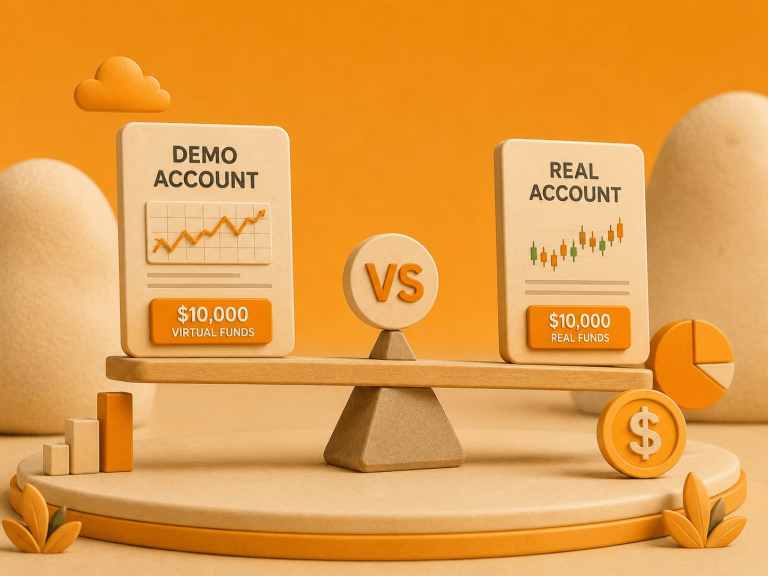
| Area | Demo account | Real account |
|---|---|---|
| Main purpose | Learn the platform, test ideas, practice execution. | Execute tested rules with real consequences. |
| Money | Virtual funds. Mistakes are feedback. | Your funds. Mistakes can trigger emotion. |
| Best use | Experiments, new assets, new indicators, unfamiliar timeframes. | Small, consistent execution of a prepared setup. |
| Biggest risk | False confidence from oversized or random practice. | Emotional decisions after wins or losses. |
| Success metric | Clean process, repeated setup, realistic journaling. | Rule-following, controlled risk, stable behavior. |
What traders actually mean by “demo vs real”
When beginners ask whether demo trading is the same as real trading, they are usually asking three quieter questions:
- If I make money on demo, does it mean my strategy works?
- Why do I trade worse when the account is real?
- How do I switch without learning every lesson the expensive way?
Those are better questions than the generic “is demo realistic?”
Demo is realistic enough to teach the platform, chart reading, order flow, basic timing, and strategy rules. It is not realistic enough to prove that you can follow those rules when money, ego, fear, and impatience enter the room.
That does not make demo useless. It makes demo specific. Treat it like a training ground, not a prophecy.
The short answer
A demo account uses virtual funds, so it is best for learning, testing, and practicing without financial risk. A real account uses your own money, so it adds emotional pressure, stricter risk management, real execution conditions, and accountability.
The market may be the same. The trader is not.
That difference matters more than most beginners expect.
1. Demo trading is about learning mechanics
The first job of a demo account is not to make you feel profitable. It is to remove basic confusion.
Before you trade real money, you should be able to do these things without thinking too hard:
- Open and close a trade.
- Change chart timeframes.
- Add and remove indicators.
- Understand how the trade amount affects potential loss.
- Find your trade history.
- Use the platform without clicking around in panic.
- Explain why you entered a trade in one sentence.
That sounds basic because it is. But basic is where many real-money mistakes begin.
A trader who is still learning the interface should not also be managing real emotional pressure. If you are unsure which button closes a position, the problem is not your strategy. You are still in platform-learning mode, and demo is exactly where that belongs.
2. Real trading is about decision quality
Once money is real, the main challenge changes. You are no longer just asking, “Can I identify a setup?” You are asking, “Can I identify a setup and still behave like the person who wrote the plan?”
This is where many traders get surprised.
On demo, they wait calmly for confirmation. On real, they jump in early because they do not want to miss the move.
On demo, they accept a losing trade. On real, they move the stop because they do not want to be wrong.
On demo, they trade normal size. On real, they either go too small to feel anything or too large because they want the account to grow quickly.
The strategy did not necessarily change. The emotional load changed.
The goal of early real trading is not to make as much money as possible. The goal is to find out whether your process survives contact with consequence.
3. A demo win streak can give false confidence
Demo profits are useful, but only if you read them carefully.
A 20-trade winning period on demo can mean your strategy has promise. It can also mean you took oversized trades, traded randomly during a lucky market phase, or abandoned risk rules because there was no real cost.
The question is not “was the demo account profitable?” The better questions are:
- Did I use the same position size rules I would use with real money?
- Did I write down every trade?
- Did I take only planned setups?
- Did I include losing days in the sample?
- Did I avoid resetting the demo balance after bad decisions?
- Did I test the strategy across at least a few different market conditions?
If the answer is no, the demo result is not worthless, but it is incomplete. It proves you can click through a favorable period. It does not yet prove that you have a repeatable process.
4. Real losses feel larger than demo losses
A $100 loss on a demo account and a $100 loss on a real account are mathematically identical and psychologically nothing alike.
That is not weakness. It is how humans work. Money carries meaning. It can represent time, effort, rent, pride, progress, or a promise you made to yourself. Once a trade touches that meaning, your brain stops treating it like a clean probability exercise.
This is why the first real account should be boring by design.
If the trade size is so large that one loss makes you angry, you are not testing a strategy anymore. You are testing your nervous system. Reduce size until a normal loss feels annoying but manageable.
One useful benchmark: after a losing trade, you should still be able to take the next valid setup exactly as planned. If you cannot, the size is too big for your current stage.
- You can describe one setup in simple language.
- You followed it for at least 30 demo trades.
- You know your risk before entry.
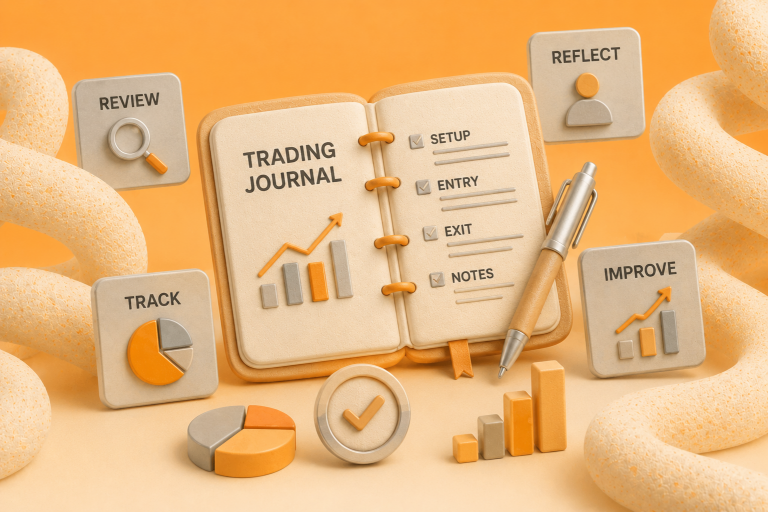
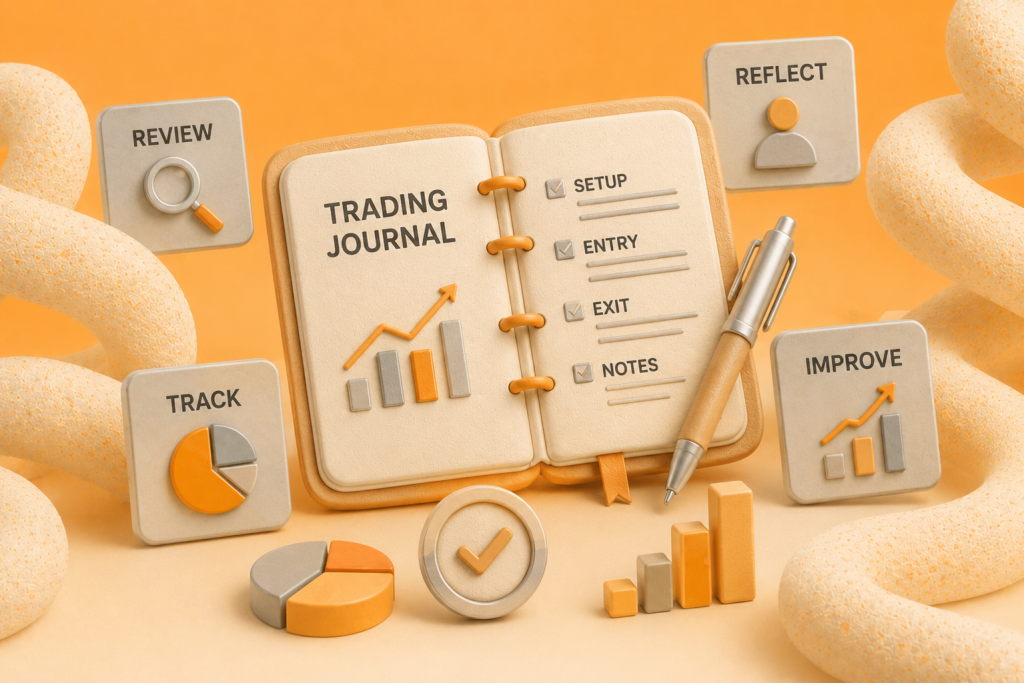
- You keep a basic trading journal.
- You can take a loss without changing the whole plan.
- You reset demo after bad days.
- You change indicators after every loss.
- You cannot explain why a trade was entered.
- You trade bigger after losses.
- You need the first real trades to make meaningful money.
5. Execution conditions matter more when money is real
For most beginners, the biggest real-account difference is psychological. But execution still deserves respect.
Live markets can move fast. Spreads may widen around news. Prices can change between the moment you decide and the moment the order is filled. Volatility can make a calm setup feel messy in seconds.
This does not mean every real-account fill will be dramatically different from demo. It means you should avoid learning about execution risk at the worst possible time: oversized, emotional, and trading during major news.
Practical rules:
- Do not make your first real trades during high-impact news.
- Avoid switching assets constantly.
- Watch how spreads behave at the times you trade.
- Start with small size so execution surprises are lessons, not account events.
- If a market is moving too fast for you to think clearly, skip it.
6. Demo is where you experiment; real is where you execute
One of the cleanest ways to use both accounts is to give each one a different job.
Your demo account is the lab. It is where you test a new indicator, try a different timeframe, build a new strategy, practice a news-event playbook, or learn an unfamiliar asset.
Your real account is the execution desk. It is where only tested ideas are allowed.
Most traders blur that line. They test on real money because they are impatient, then run back to demo after losses because confidence is damaged. That cycle creates noise. Nothing gets properly tested and nothing gets properly executed.
Try this rule instead:
New idea? Demo first. Proven rule? Real account, small size.
It is not glamorous. It works because it keeps curiosity and discipline from fighting each other.
7. How long should you stay on demo?
There is no magic number of days.
Two weeks can be enough for someone who already understands charts and only needs to learn a new platform. Three months may not be enough for someone who is still changing strategy every Friday.
Use milestones, not time.
You are probably ready to start very small on a real account when you can:
- Define one setup clearly.
- Follow the same entry and exit rules for at least 30 demo trades.
- Keep a basic journal.
- Accept a losing trade without immediately changing the system.
- Explain your risk per trade before entering.
- Stop trading after hitting a daily limit.
Notice what is not on that list: “make huge demo profit.”
Profit matters, but consistency of behavior matters first. A trader who made 40% on demo by improvising is less ready than a trader who broke even while following a defined process cleanly.
8. The safest way to switch from demo to real
The jump from demo to real should feel like turning the volume up slightly, not walking into a different life.
The mistake is going from virtual funds to meaningful money too quickly. Your first real trades are not there to change your finances. They are there to expose the emotional and operational gaps that demo could not show you.
For the first 30 real trades, measure three things:
- Did I follow the setup rules?
- Did I respect the planned size?
- Did I stop when my stop rule said to stop?
Do not judge the transition only by profit or loss. Thirty trades is too small to prove much about edge, but it is enough to reveal whether you are becoming impulsive under pressure.
If the answer is yes, lower size or return to demo for that specific issue. Going smaller is not failure. It is how you keep learning affordable.
9. Use the same strategy on demo and real
This sounds obvious. It is not what most traders do.
They practice one strategy on demo, then open a real account and suddenly trade five assets, different timeframes, larger size, and setups they never tested. Then they say, “Demo and real are completely different.”
Sometimes the difference was not the account. It was the trader changing the experiment.
When you move to real money, keep the variables boring:
- Same asset group.
- Same timeframe.
- Same setup.
- Same session.
- Same risk rule.
- Same journal fields.
If performance changes, you will know the likely variable: real-money pressure. If everything changes at once, you learn nothing.
10. The trade size should be small enough to tell the truth
There is a strange problem with going too small: if the trade is so tiny that you do not care at all, it may not teach the emotional lesson.
There is an obvious problem with going too big: if the trade hurts, you stop learning and start defending yourself.
The right first size sits between those extremes. It should be real enough that you notice the outcome, but small enough that you can still follow the plan after a loss.
Ask this before the first real trade:
- If this trade loses, will I try to win it back immediately?
- If I lose three trades in a row, will I still respect the fourth setup?
- If the answer is no, can I cut the amount in half?
The best early real-money size is not the size that makes the most profit. It is the size that lets you collect honest data about your behavior.
11. What to keep practicing on demo after you go real
Moving to a real account does not mean you retire the demo account. Good traders keep using demo for the work that real money does not need to pay for.
Use demo for:
- Testing a new indicator.
- Practicing a new chart pattern.
- Learning an unfamiliar asset.
- Testing a different expiry, timeframe, or session.
- Rehearsing a strategy after a break.
- Practicing order placement until it feels automatic.
Use real for:
- Executing the tested setup.
- Building emotional discipline.
- Tracking your actual behavior.
- Learning how you respond to wins and losses.
The split is simple: demo is for exploration, real is for execution.
12. Mistakes traders make when switching
The demo-to-real transition does not usually fail because the trader knows nothing. It fails because they try to change too many things while emotions are highest.
| What happens | Likely cause | Practical fix |
|---|---|---|
| You enter too early | Fear of missing out. | Require a candle close or written trigger before entry. |
| You close winners too soon | Fear of giving back visible profit. | Predefine partial exits or use a rule-based target. |
| You double after a loss | Revenge trading. | Set a two-loss pause rule and reduce size for the next session. |
| You stop taking valid setups | Size is too emotionally heavy. | Cut size until losses feel manageable. |
| You keep changing the strategy | You are reacting to small samples. | Freeze rules for 30 trades before judging the setup. |
The most dangerous mistake is revenge trading after the first real loss. It feels like fixing the problem, but it usually creates the real problem.
A first loss does not need a dramatic response. It needs a journal entry.
Write down what happened:
- Was the setup valid?
- Was the size planned?
- Did you exit according to the rule?
- Did anything feel different because money was real?
If the trade followed the plan, take the feedback and move on. If it did not, reduce size until following the plan becomes easier than breaking it.
13. A simple demo-to-real routine
If you want a practical weekly workflow, use this:
Monday to Friday: trade only your tested setup on the real account, small size.
After each trade: fill in the journal within five minutes. Keep it short.
During the week: any new idea goes to demo, not real.
Weekend review: compare demo experiments with real execution. Do not promote a demo idea to real until it has rules, examples, and at least a small sample.
This routine protects you from the classic beginner trap: turning the real account into a playground and the demo account into a place you visit only after damage is done.
14. What demo cannot teach you
Demo cannot fully teach patience when you are down for the week.
It cannot teach how your body feels after three real losses in a row.
It cannot teach whether you will close a good trade too early because the profit is finally visible.
It cannot teach whether you will follow your stop rule when the loss is real.
Those lessons require real stakes. But they do not require large stakes.
That distinction matters. You can learn the emotional side of trading with small real size. You do not need to make the lesson expensive for it to be real.
15. What real trading should not become
Real trading should not become entertainment.
If you open the platform because you are bored, angry, excited, or trying to recover from yesterday, the account type is no longer the main issue. You are no longer trading a plan. You are using the market for stimulation.
The strongest sign that you are maturing as a trader is not that you trade more. It is that you skip more clearly.
Demo helps you learn what a setup looks like. Real trading helps you learn what you look like when the setup is not there.
That second lesson is uncomfortable. It is also where most of the growth is.
Final thoughts
Demo and real accounts are not rivals. They are different tools.
A demo account is where you learn the platform, test ideas, practice entries, and build the first version of your process without financial risk. A real account is where you learn whether that process survives pressure, money, impatience, and emotion.
Do not rush the transition. But do not hide in demo forever either.
Use demo until your rules are clear. Move to real with small size. Keep the same setup. Journal every trade. Increase size only when your behavior, not your confidence, proves that you are ready.
The goal is not to make your first real account exciting.
The goal is to make it survivable enough that you can keep learning.