



Equity trading is a way to participate in the performance of companies. This is done by speculating on the prices based on the earnings and news about the companies.
This is a guide on the basics of equity trading and the different types and strategies a beginner needs to be aware of.
What Is Equity Trading
Equity trading means buying and selling shares of publicly traded companies. When a trader buys a stock, he becomes a partial owner of the company. The value of the shares fluctuates continuously depending on supply, demand and perception of the company.
Equity trading differs from long-term investments, which involve longer holding periods for shares. Traders want to benefit from the fluctuating stock prices, not the company’s growth over a period of time.
Equity trading occurs on a stock exchange, which is a regulated platform for buying and selling shares. The prices are transparent, liquid and information is easily available, making shares an easy place for new traders to start with.
How Equity Trading Works
Equity trading is a process whereby traders buy and sell shares through a stock exchange market, where buyers and sellers are connected electronically. Traders are connected to a broker and the shares are traded accordingly. Once a trader has traded, he or she becomes the owner of the shares.
There are different types of orders used to execute a trade in the equity market. Market orders are those orders that are executed immediately, while limit orders are those orders that are executed at a specific price. Stop orders are used to execute a trade when the price hits a particular point.
The price of shares is usually determined by a change in demand and supply. The performance of a company, news and market sentiment are the factors that affect the demand for shares and traders look for such factors to predict the change in price.
Types of Equity Trading
Equity trading can be approached in different ways depending on time horizon, risk tolerance and trading goals. Each style uses the same market but applies different logic and decision making.
Day Trading Stocks
Day trading involves opening and closing positions within the same trading day. Traders focus on intraday price movement and short term momentum. Positions are not held overnight to avoid gap risk caused by news or earnings.
This style requires fast decision making and strict risk control. It is more demanding and usually suited for experienced traders.
Swing Trading Stocks
Swing trading focuses on price movements that develop over several days or weeks. Traders aim to capture short to medium term trends rather than intraday noise. Technical analysis plays a central role in identifying entries and exits.
Swing trading is popular because it offers a balance between activity and time commitment. It also allows traders to avoid constant screen time.
Long Term Equity Trading
Long term equity trading, also known as position trading, is a style of trading that involves holding trades for a period of weeks or even months. In this style of trading, traders look for broad trends and often combine technical and fundamental analysis.
This style of trading demands patience and a tolerance for large price movements. It is often employed by traders who want fewer trading decisions and a lower trading frequency.
Equity Trading vs Other Trading Markets
Equity trading differs from other markets in structure, volatility and risk profile. Understanding these differences helps traders choose the market that fits their style and expectations.
Equity Trading vs Forex Trading
In the case of equity trading, the market revolves around individual companies. On the other hand, the forex market revolves around pairs of currencies. The price of stocks depends on the events of individual companies. The price of forex depends on macroeconomic factors and interest rates.
In the case of equity trading, the market operates within fixed hours. The forex market operates almost 24 hours a day. Hence, the equity market is structured and less flexible.
Equity Trading vs Cryptocurrency Trading
In the case of equity trading, the market is regulated and has a strong support system. The cryptocurrency market has recently entered the market and has been more volatile. The price movement of stocks has been relatively predictable compared to the cryptocurrency market.
In the case of equity trading, the market has been transparent. The financial reports and events of companies have helped investors make better decisions. Hence, the market has been less uncertain.
What Moves Equity Prices
Equity prices move based on how the market values a company at any given moment. This value is shaped by expectations. When expectations improve, prices tend to rise. When expectations weaken, prices often fall.
One of the strongest drivers is company performance. Earnings reports, revenue growth, profit margins and forward guidance can quickly change how traders view a stock. Strong results often attract buyers. Weak results can trigger selling pressure.
Economic conditions also play a major role. Interest rates, inflation data and employment reports affect entire stock markets. When economic outlook improves, equities often benefit. When uncertainty increases, investors may reduce exposure to stocks.
Market sentiment matters as well. News headlines, sector trends and overall risk appetite influence demand. Even without major news, shifts in sentiment can move prices through buying and selling pressure.
Basic Equity Trading Strategies
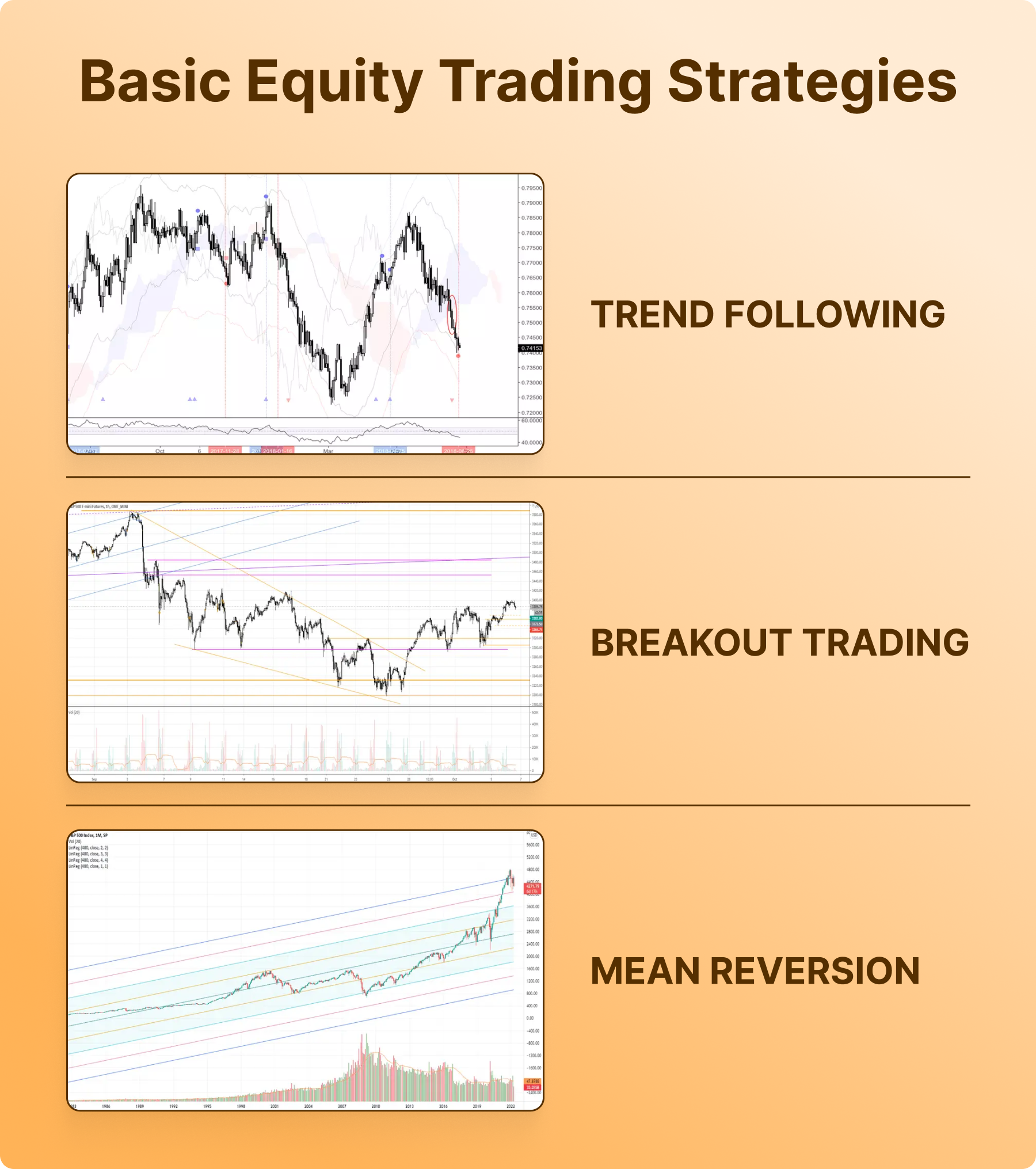
Equity trading strategies aim to create structure and consistency. Each strategy is built around a specific market behavior. Traders choose strategies based on their timeframe and risk tolerance.
Trend Following
Trend Following is a style of trading that seeks to trade in the direction of the trend. Traders in this style look for stocks that are making higher highs in an uptrend or lower lows in a downtrend. They enter trades during pullbacks rather than during strong moves in the market. This style of trading works well in a stable market environment.
Breakout Trading
Breakout trading is a type of trading where a strong price movement occurs past a significant price level, like resistance or a consolidation area. A breakout is a sign of new entrants buying or selling a particular asset with conviction.
It is important to wait for a breakout confirmation, as this minimizes the chances of a false breakout. Volume is also an important indicator of a breakout.
Mean Reversion
Mean reversion is based on the idea that price tends to return to its average over time. Traders look for stocks that have moved too far too fast and show signs of slowing momentum.
This strategy requires careful timing and strong risk control. It works better in ranging or less volatile markets.
Risk Management in Equity Trading
Risk management is one of the most important aspects of equity trading. Even strong strategies fail without proper control of losses. The goal is not to avoid losing trades. The goal is to make sure no single trade can cause serious damage to the trading account.
Equity traders usually define risk before entering a position. This starts with setting a stop loss at a level where the trade idea is no longer valid. Position size is then adjusted so the potential loss stays within acceptable limits.
Effective risk management in equity trading includes:
- Limiting risk per trade to a small percentage of capital
- Using stop losses based on structure or volatility
- Avoiding overexposure to a single stock or sector
- Maintaining a positive risk to reward ratio
Traders who focus on risk management survive long enough to develop skill. Profits are a result of discipline, not prediction.
Common Equity Trading Mistakes
Many equity traders struggle not because of strategy, but because of repeated mistakes. These errors usually come from lack of structure, emotion or unrealistic expectations.
One common mistake is overtrading. Traders open too many positions without clear setups. This increases costs and reduces focus. Quality trades matter more than quantity.
Another issue is ignoring risk limits. Some traders increase position size after losses or move stop losses out of hope. This often leads to larger drawdowns and emotional decisions.
Other frequent mistakes include:
- Trading without a clear plan
- Chasing price after strong moves
- Holding losing trades too long
- Selling winning trades too early
- Ignoring broader market conditions
Avoiding these mistakes improves consistency more than adding new strategies. Discipline and patience play a bigger role than market timing.
Is Equity Trading Good for Beginners
Equity trading can be a good starting point for beginners. Stock markets are regulated and transparent. Price data and company information are easy to access.
Beginners benefit from clear market structure. Trading hours are fixed. Liquidity is usually high for major stocks. This reduces unexpected behavior compared to less regulated markets.
There are also challenges. Stocks can gap after news or earnings. Emotional attachment to companies can affect decisions. Beginners must learn risk control early.
Equity trading suits beginners who:
- Prefer structured markets
- Want access to reliable data
- Are willing to learn risk management
- Focus on consistency over speed
Starting simple is important. One market. Few stocks. Clear rules. This approach builds confidence and skill over time.
How to Start Equity Trading
Starting equity trading requires structure, not complexity. Beginners should focus on building a solid process before looking for advanced strategies. A clean setup and clear rules help reduce mistakes early on.
The first step is choosing a regulated broker that offers access to major stock markets. Traders should start with well known, liquid stocks to avoid excessive volatility. Learning how market hours and order types work is also essential.
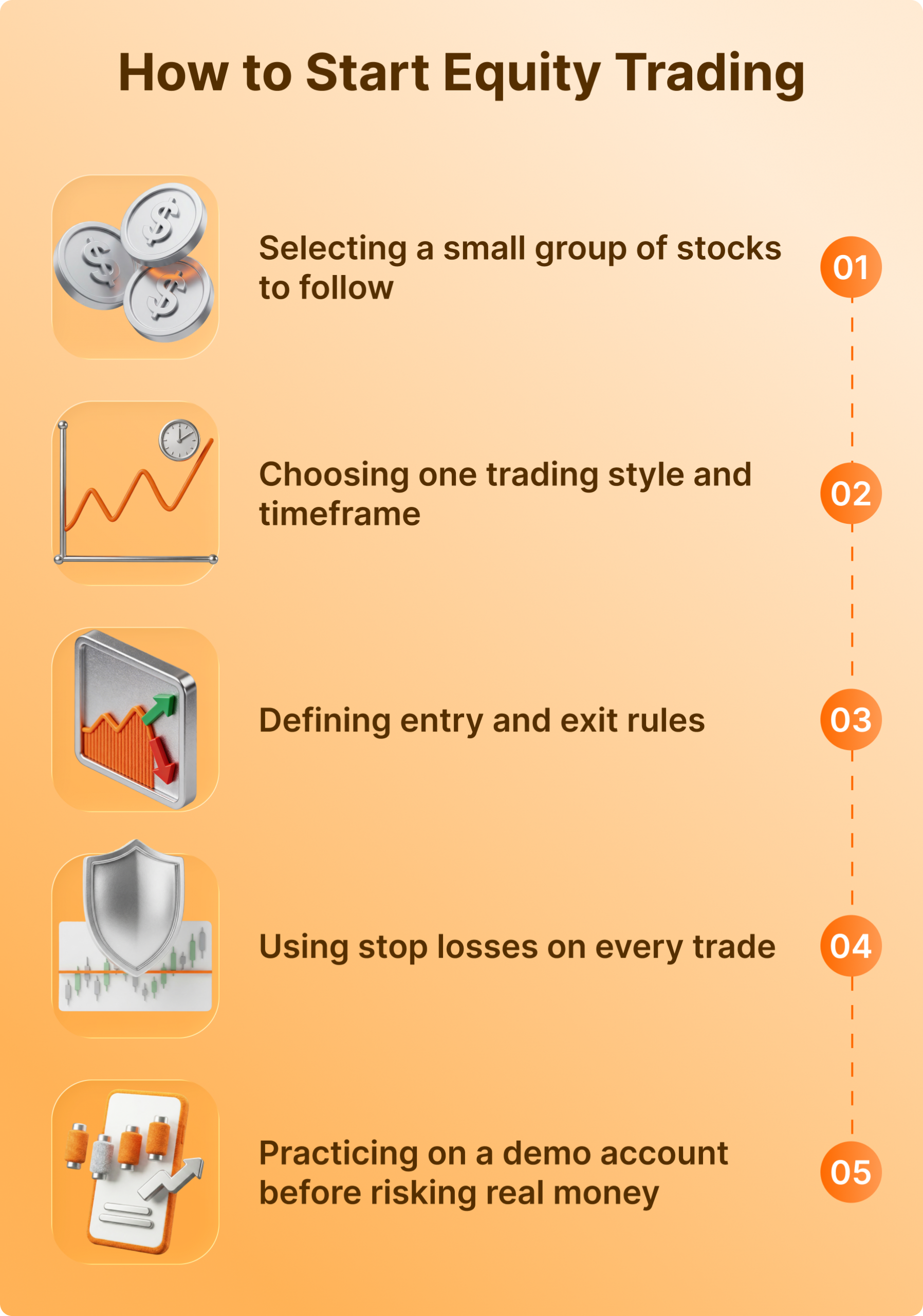
A practical starting approach includes:
- Selecting a small group of stocks to follow
- Choosing one trading style and timeframe
- Defining entry and exit rules
- Using stop losses on every trade
- Practicing on a demo account before risking real money
Keeping a trading journal helps track progress and identify mistakes. Reviewing trades regularly builds discipline and improves decision making.
Final Words
Equity trading is a structured way of participating in the financial markets. It is an opportunity for people to make money from the shares of publicly traded companies in a structured and regulated manner.
The secret for being successful in equity trading is preparation, discipline and risk management. Techniques are important in equity trading, but being consistent is more important. People should focus on processes instead of results. This will help them improve over time.
Equity trading is not about doing anything. It is about waiting.