


Bitcoin is approaching one of the most discussed supply milestones in its history. So, the buzzing questions today are: how many bitcoins have been mined, how many bitcoins are left to be mined, and when will the last bitcoin be mined?
As of 2026, ~95% of the total Bitcoin supply has already been mined. With a hard cap of 21 million coins built into its code, Bitcoin is designed to become increasingly scarce over time. That fixed supply is one of the main reasons the value of bitcoin has captured global attention.
| 🚀 Trade the 20M Bitcoin Milestone with IQ Option IQ Option is marking the moment with special trading activities and incentives: 1. Increased profitability up to +92% on BTC/USD (OTC), ETH/USD (OTC), and XRP (OTC). 2. 20M BTC Trading Marathon: make 50 trades on your real account on March 2-5 and get a must-have crypto strategy as a gift on Friday, March 6. 3. BTC 20M Momentum Tournament with a $20K prize fund | March 2–22. |
1. What Is Bitcoin?
To understand Bitcoin today — its volatility, its headlines, its bitcoin all time high moments — we need to go back to where it all began.
Definition and Core Concept of Bitcoin
Bitcoin is a decentralized digital currency, meaning it has no central authority like a bank or government. It enables peer-to-peer transactions recorded on a public blockchain, where every bitcoin transaction is verified by a distributed network of computers instead of a single institution.
Unlike traditional money, it cannot be printed by central banks.
The Bitcoin symbol is ₿, and its bitcoin ticker is BTC. Bitcoin is instantly recognizable by its orange logo (₿), which has become one of the most famous financial symbols in the world.
How Does Bitcoin Work?
Bitcoin works through blockchain technology. Transactions are grouped into blocks and validated by miners using computational power. Once validated, blocks are added to the blockchain permanently.
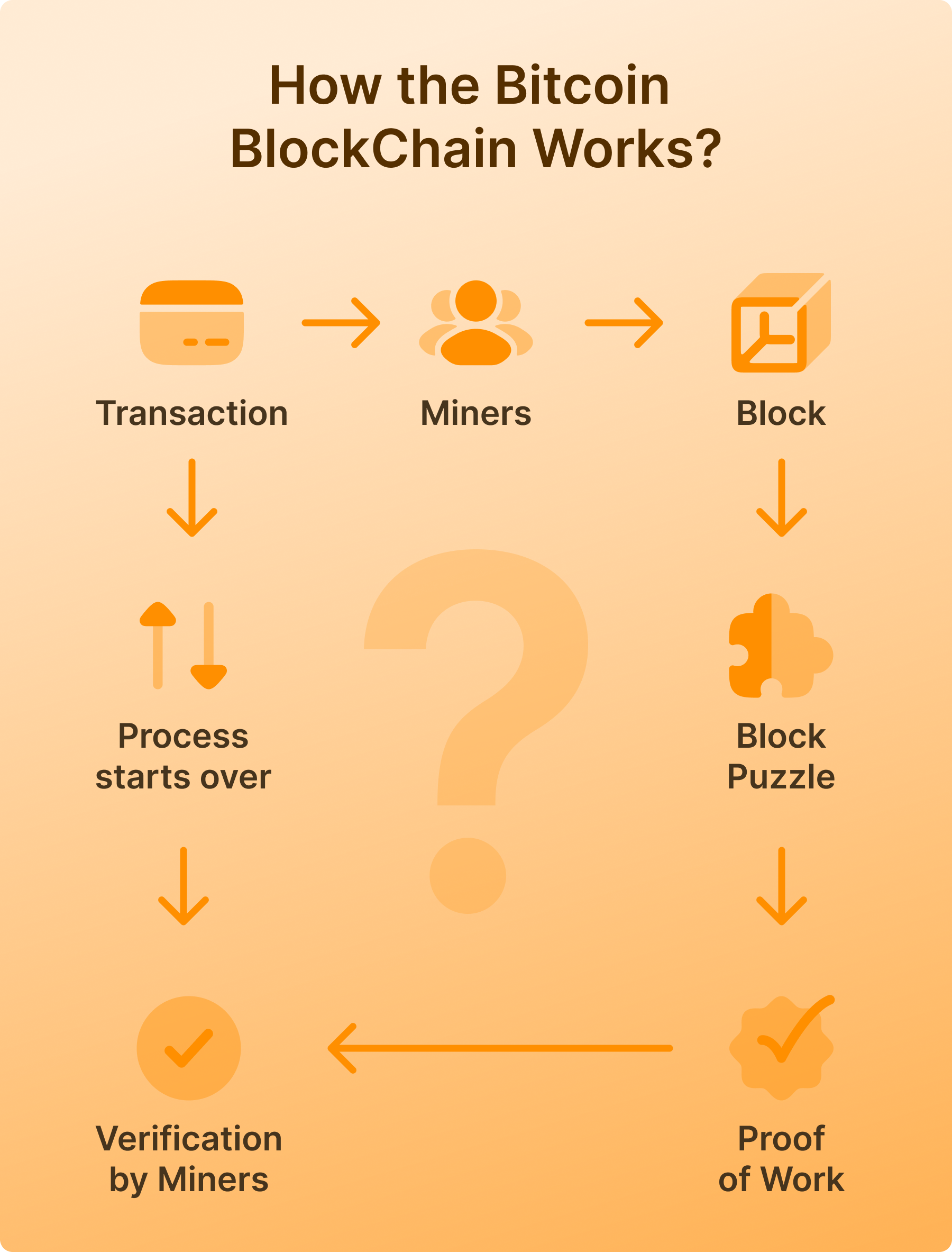
Each bitcoin transaction includes:
- A sending wallet address
- A receiving bitcoin address
- A transaction fee
- Digital signatures
Who Invented Bitcoin and When Was It Launched?
Bitcoin was created by an anonymous individual or group under the name Satoshi Nakamoto. The identity of Bitcoin’s creator remains unknown.
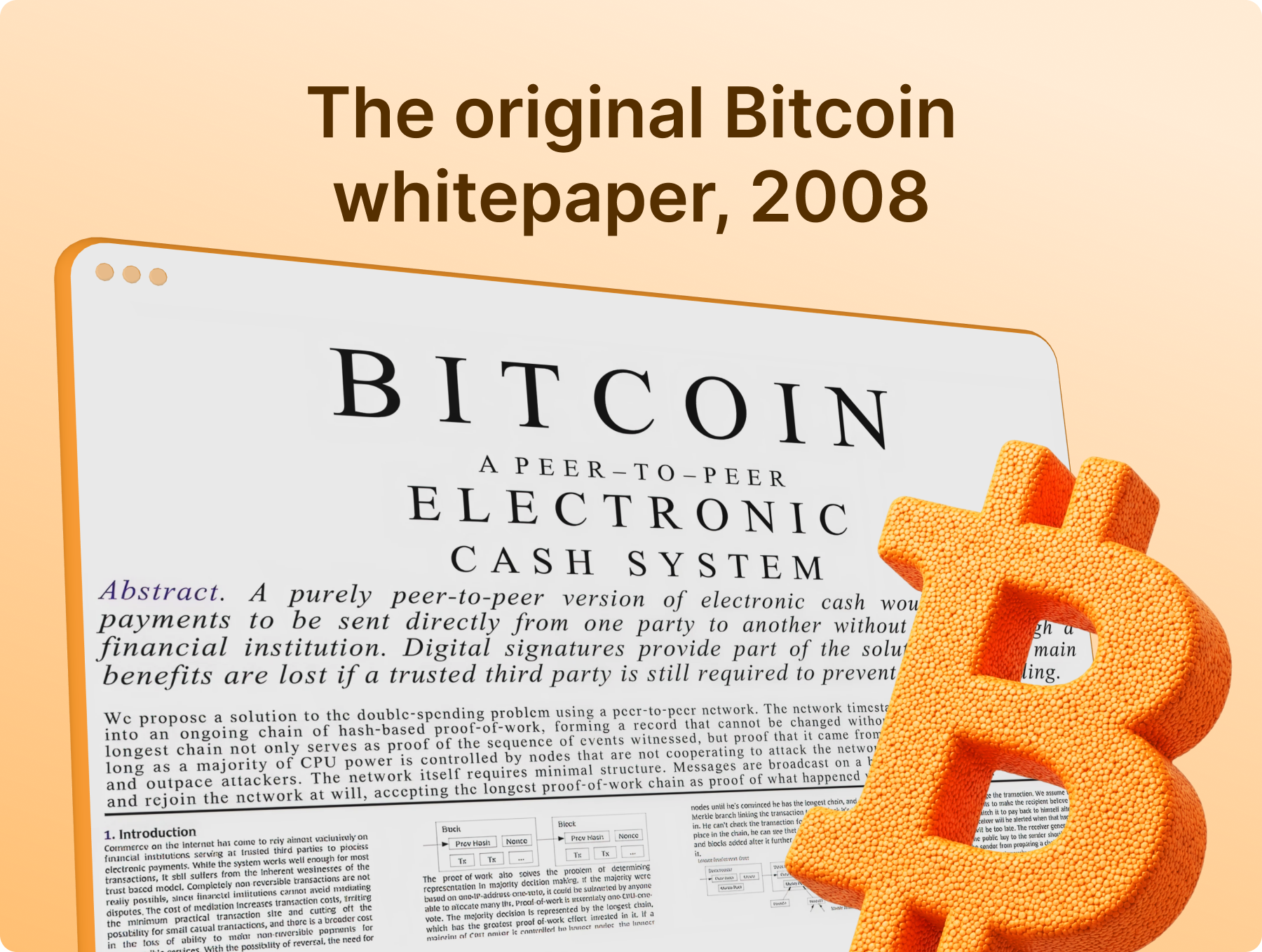
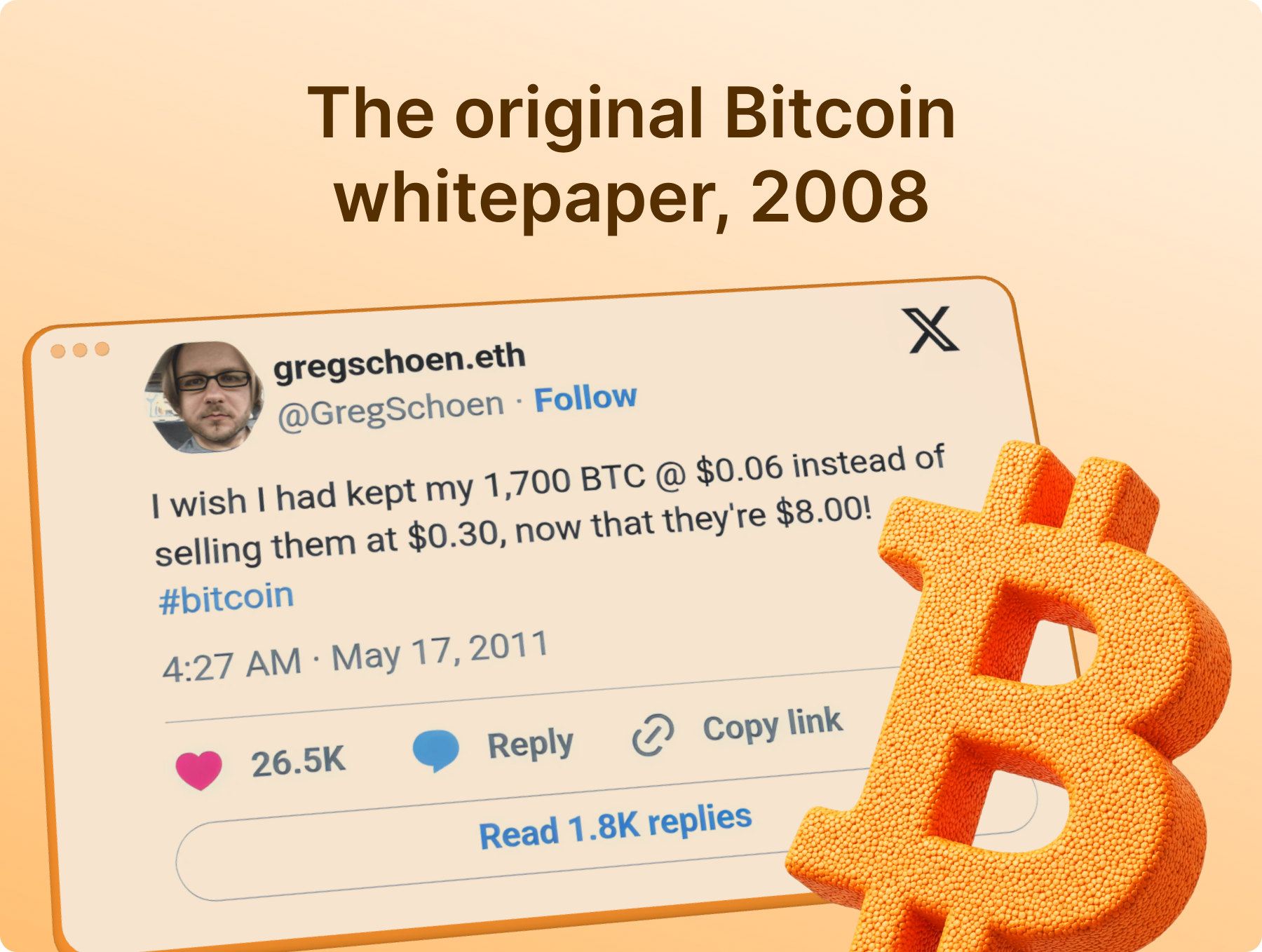
The Bitcoin whitepaper was published in 2008. The network officially launched in 2009.
Bitcoin Creation Date and Historical Background
Eighteen years ago, in the aftermath of the global financial crisis, a quiet whitepaper appeared on a cryptography mailing list.
It described a strange idea:
Money that didn’t belong to any government, bank, or company.
At first, only a small group of programmers paid attention — and even they weren’t sure what it would become. Many critics called it a Ponzi scheme, comparing it to sports betting, casinos, and gambling, claiming early buyers could only profit if new investors kept joining.
Unlike a Ponzi scheme, Bitcoin has no central operator promising guaranteed returns — it is open-source software with transparent supply rules.
The Early Days
When Was Bitcoin Invented?
Bitcoin was conceptualized in October 2008 during the global financial crisis. It was introduced as an alternative financial system without centralized control.
When Did Bitcoin Come Out?
Bitcoin came out in January 2009 when the first block (the Genesis Block) was mined.
Bitcoin Starting Price
Bitcoin initially had no formal market price. The first recorded transaction valued 10,000 BTC at about $41.
Bitcoin Pizza Day History
In May 2010, a programmer named Laszlo Hanyecz bought two pizzas for 10,000 BTC. Today, this event is known as Bitcoin Pizza Day and represents one of the earliest real-world Bitcoin transactions.

2. Bitcoin History and Evolution
After those two pizzas were purchased, the race was officially on. We can roughly distinguish five major historical phases in coin’s development.
Overview of Bitcoin’s Development Timeline
- Early experimentation phase (2009–2012), when Bitcoin was mostly used by geeks. No major exchanges, no mainstream attention. Mining was possible on personal computers, and the focus was on testing whether decentralized money could actually work.
- First major bull run (2013) — Bitcoin saw its first major price jump and started making global news. The price rose quickly, and millions of people heard about cryptocurrency for the first time.
- Institutional awareness (2017) — Bitcoin became a topic in mainstream finance. Futures trading began, large investment funds started paying attention, and everyday investors rushed in, pushing speculation to new highs.
- Institutional adoption and ETF era (2020–2024) — Public companies began buying and adding it to their balance sheets as a Bitcoin reserve. Investment firms launched Bitcoin ETFs, making it easier for more people to invest. Regulations became clearer, and Bitcoin became connected to traditional financial markets.
- Maturing digital asset phase (2025+) — BTC is now seen as a serious global asset. Its price is influenced by factors like interest rates and global liquidity. It’s still volatile, but the market is more developed, with participation from retail traders, hedge funds, pension funds, and corporations.
Bitcoin Evolution and Key Turning Points
Here are some of the most important turning points:
- The Mt. Gox collapse (2014) — Back then, Mt. Gox was the place to trade Bitcoin. One day, it collapsed, with hundreds of thousands of coins lost in a hack. Panic followed, prices crashed — but something important happened too: the network didn’t break. That moment forced the industry to build stronger exchanges and better security.
- Silk Road Shutdown (2013) — When the Silk Road marketplace was shut down, many people thought BTC would die with it. Instead, the opposite happened. It survived its first major public scandal — and proved it wasn’t tied to one platform or one use case.
- The Block Size War and Forks (2017) — At one point, the community couldn’t agree on how the coin should scale. The result: new versions (forks) like Bitcoin Cash. It showed something powerful: this crypto has no CEO, decisions are messy, but the original chain kept going.
- Bitcoin Futures Launch (2017) — When traditional exchanges introduced Bitcoin futures, Wall Street officially stepped in. This meant big money could now bet on Bitcoin going up — or down — without holding it. Volatility increased → attention followed.
- The 2017 Mania — That year, Bitcoin was everywhere: in the news headlines, at dinner tables, and search trends. Prices surged and crashed, many called it a bubble. As Bitcoin grew, searches for “free Bitcoin” exploded.

- Corporate Adoption (2020) — Public companies started buying BTC as a reserve asset. It was no longer just “internet money.” It was entering corporate balance sheets.
- Bitcoin ETFs Approval (2024) — When spot Bitcoin ETFs were approved, it made investing simpler for traditional investors. No wallets, no private keys, familiar platforms. Institutional money flowed in.
- Elon Musk Enters the Chat (2021) — Tesla announced it bought Bitcoin for its corporate reserve → prices surged. Later, Musk tweeted concerns about energy use → prices dropped. A few tweets from a single influencer moved billions, and the coin showed it could react like a tech stock — even though it wasn’t one.
- Trump Comments on Bitcoin (2019 & Beyond) — In 2019, Donald Trump became the first sitting U.S. president to publicly comment on Bitcoin. He said he was “not a fan.” Years later, the political tone shifted. Crypto had officially entered geopolitical conversations.
- Regulation Becomes Clearer (2020–2025) — At first, taxation and regulation scared the market. Over time, clearer rules actually helped. Taxes, compliance frameworks, reporting standards — all of this reduced uncertainty.
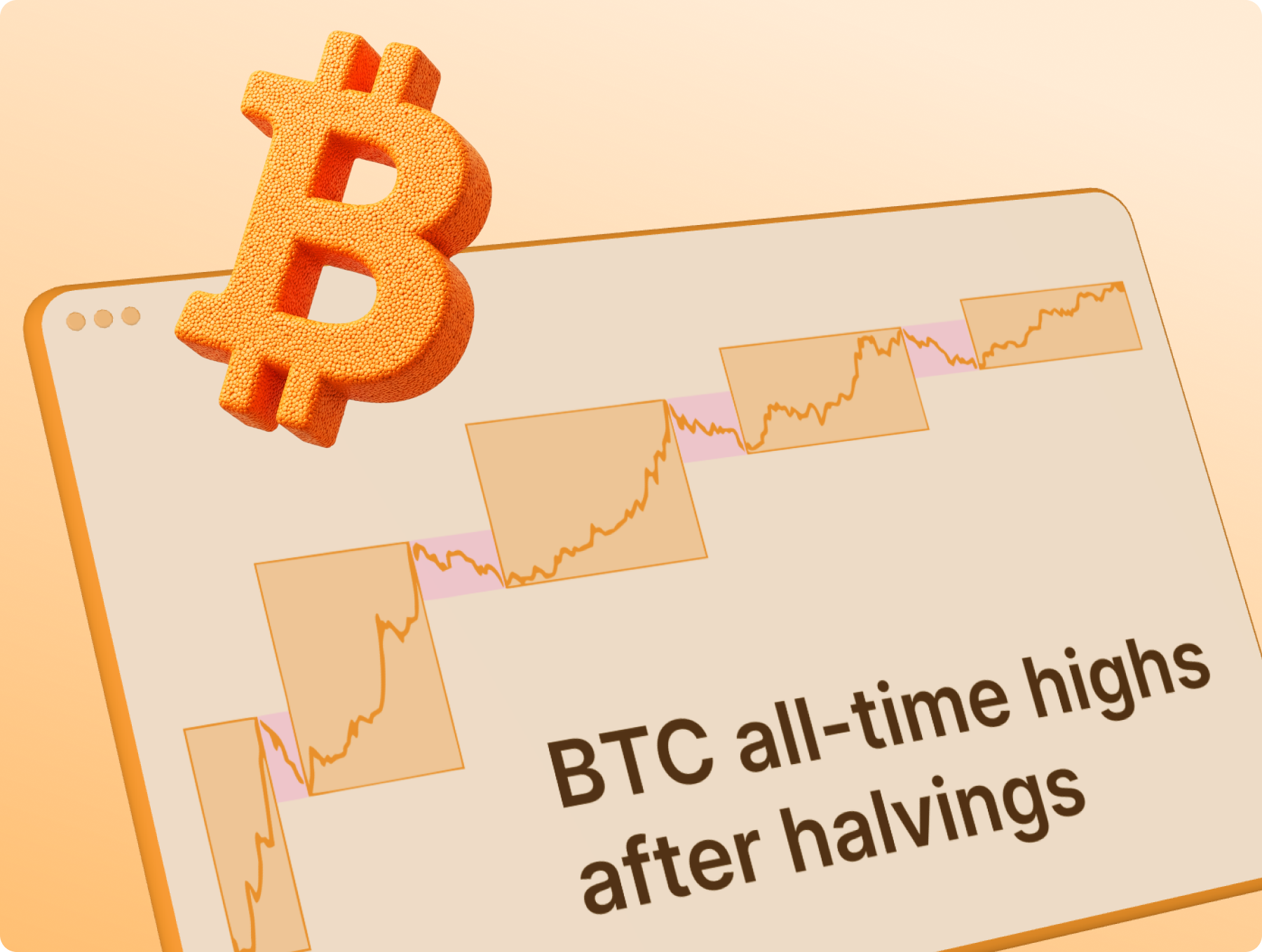
- Halving Cycles and New Highs — Every four years, the mining reward gets cut in half. Each time, the story repeats: supply tightens, attention builds, and price eventually reacts.
Bitcoin Value History and Major Milestones
Bitcoin has experienced extreme cycles of boom and bust. Let’s remember the sharpest ones.
Bitcoin All-Time Highs and Crashes
The ‘Bitcoin all time high’ headlines have appeared multiple times over the years.
Bitcoin All-Time High (ATH) Price and Records
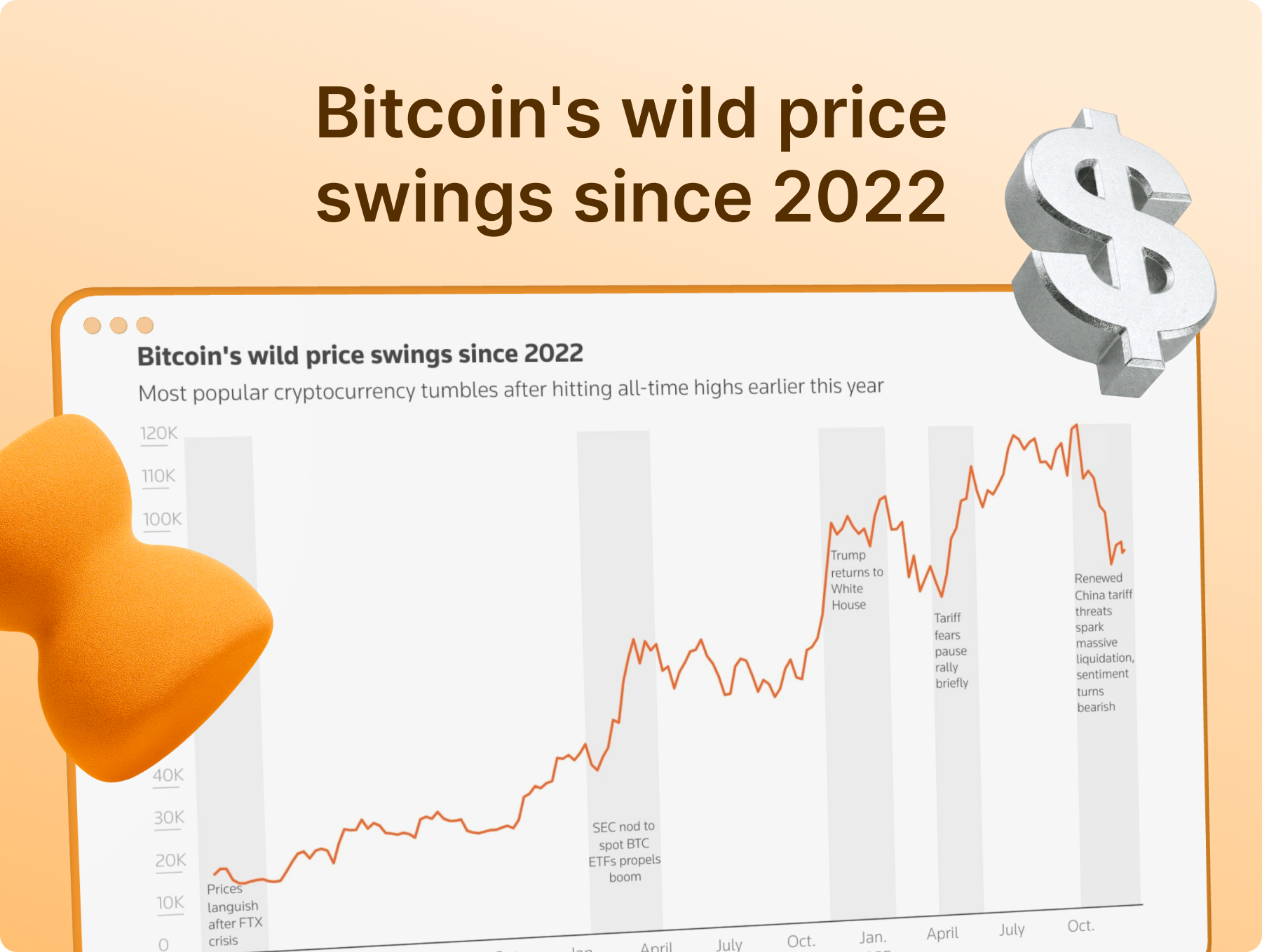
As of March 2026, Bitcoin highest price is $126,199.63 (October 2025).
Bitcoin Maximum Drawdown History
Bitcoin has historically experienced drawdowns of 70–85% between bull markets. Peak: December 2017, drawdown: ~86-87% from ATH.
Bitcoin Crash Events and Recovery Patterns
Periods of bitcoin crashing often follow euphoric price rallies. Some of the most dramatic drops include:
- -99.9% on Mt. Gox crash (2011) — A hack dumped huge amounts of BTC for pennies.
- -50% on China ban (2013) — China’s restrictions on Bitcoin banking caused a deep sell-off.
- -20%–30% on Bitfinex hack (2016) — A major exchange breach wiped out confidence and knocked prices lower.
- -84% on 2017–18 slump — After huge gains, the coin lost most of its value in a broader crypto bear market.
- -50% on COVID-19 crash (2020) — Global markets and crypto flooded with panic selling in March.
- – 55% on China mining ban & Tesla reversal (2021) — Shift in corporate stance and regulatory pressure sent prices sliding.
- -75% on FTX collapse (2022) — The bankruptcy of a major exchange triggered a sharp drop as trust evaporated.
- -77% on 2021–2022 crypto winter — From the $69,000 all-time high, the cryptocurrency declined about ¾.
- Recent market shakeouts — Leveraged liquidations and macro shifts have driven fresh volatility.
- -50% on late-2025 to early-2026 downturn — After a record high above ~$125,000 in late 2025, it fell toward ~$60,000.
ATH History and Notable Market Cycles
Bitcoin cycles often align with halving dates. The ATH history reflects four-year expansion and contraction patterns.
To understand halvings, you first need to understand mining 👇
3. Bitcoin Mining Explained
What Is Bitcoin Mining?
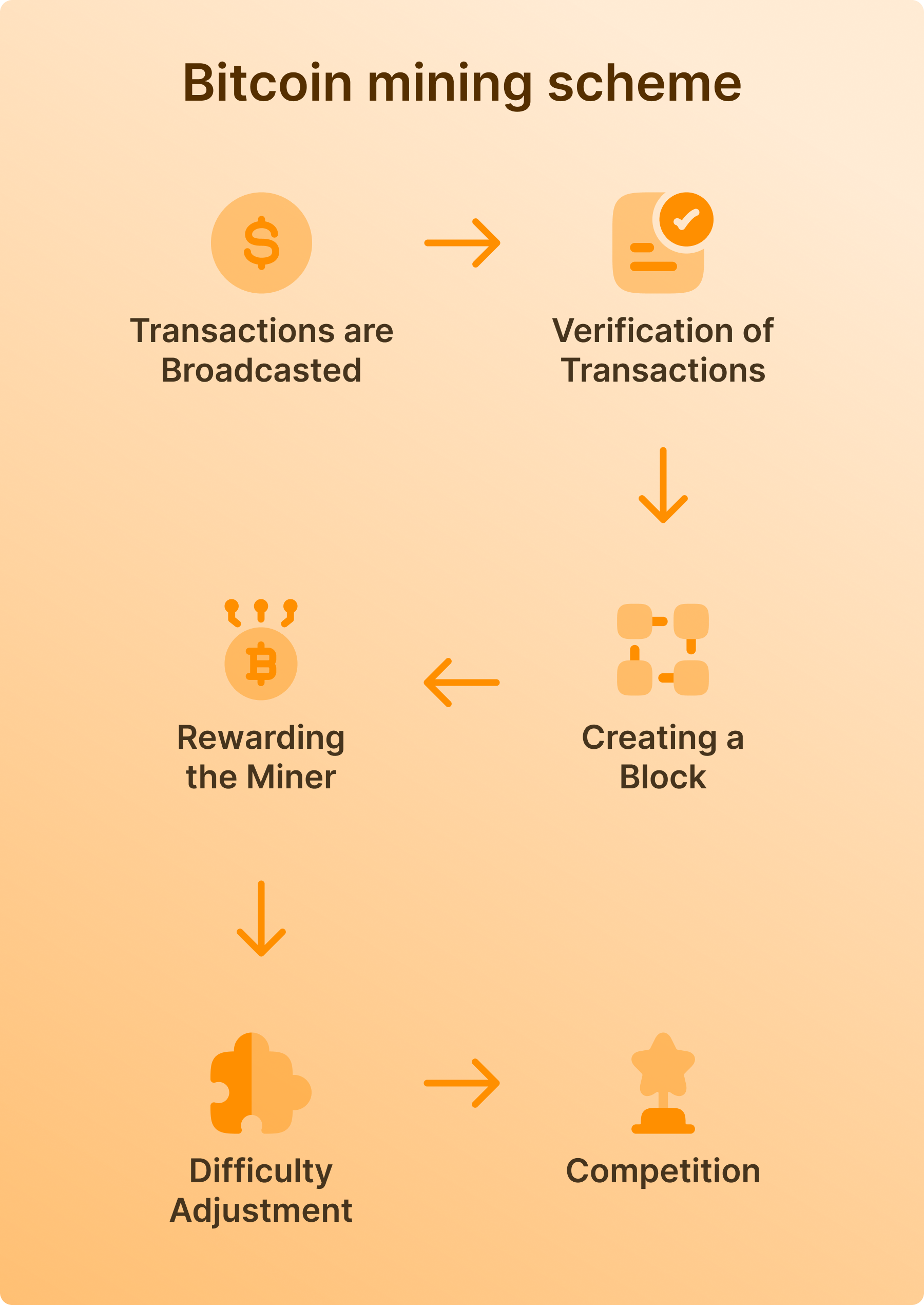
Mining is the process of validating transactions and adding new blocks to the blockchain. Miners compete using powerful hardware.
Mining rewards are the mechanism by which new bitcoins enter circulation.
How Does Bitcoin Mining Work?
Miners use specialized hardware such as a mining rig or advanced mining machine to solve cryptographic puzzles.
Rewards include:
- Block reward (new BTC)
- Transaction fee from users
How to Mine Bitcoin (Hardware, Difficulty, and Energy Use)
Mining requires:
- ASIC mining hardware
- High electricity usage
- Secure environment
- Mining pool access

The Supply Cap and Mining Limits
We’re approaching the next mined bitcoins milestone. What does it mean?
When Will All Bitcoin Be Mined?
The final coin is projected to be mined around the year 2140. This answers the question: ‘When will last bitcoin be mined?’ — likely more than a century from now.
Why so long?
Because Bitcoin’s block reward is cut in half roughly every four years, meaning new coins are issued at a slower rate over time. Most of the supply was mined in the early years when rewards were large, while the final fraction will take more than a century to release due to this exponential slowdown.
How Many Bitcoins Are Left to Mine?
As of 2026, around 1 million BTC remain. If you’re wondering how many bitcoins are left to be mined, the remaining supply shrinks every day.
How Many Bitcoins Have Been Mined So Far?
Currently, 20 million bitcoins have been mined. The exact number fluctuates slightly due to block timing.
So if you ask how many bitcoins have been mined, the answer is roughly 95% of total supply.
Current Number of Bitcoins Mined and Left to Be Mined
| Total supply cap | 21,000,000 BTC |
| Mined so far | ~ 20,000,000 BTC |
| Left to be mined | 1,000,000 |
How Many Bitcoins Are Mined per Day?
Currently, approximately 450 BTC are mined per day after the most recent halving.
What Happens When All Bitcoins Are Mined?
- Miners will earn only transaction fees
- Supply becomes completely fixed
- Scarcity narrative strengthens
- Market price depends purely on demand
Bitcoin Halving
What Is Bitcoin Halving and Why It Matters
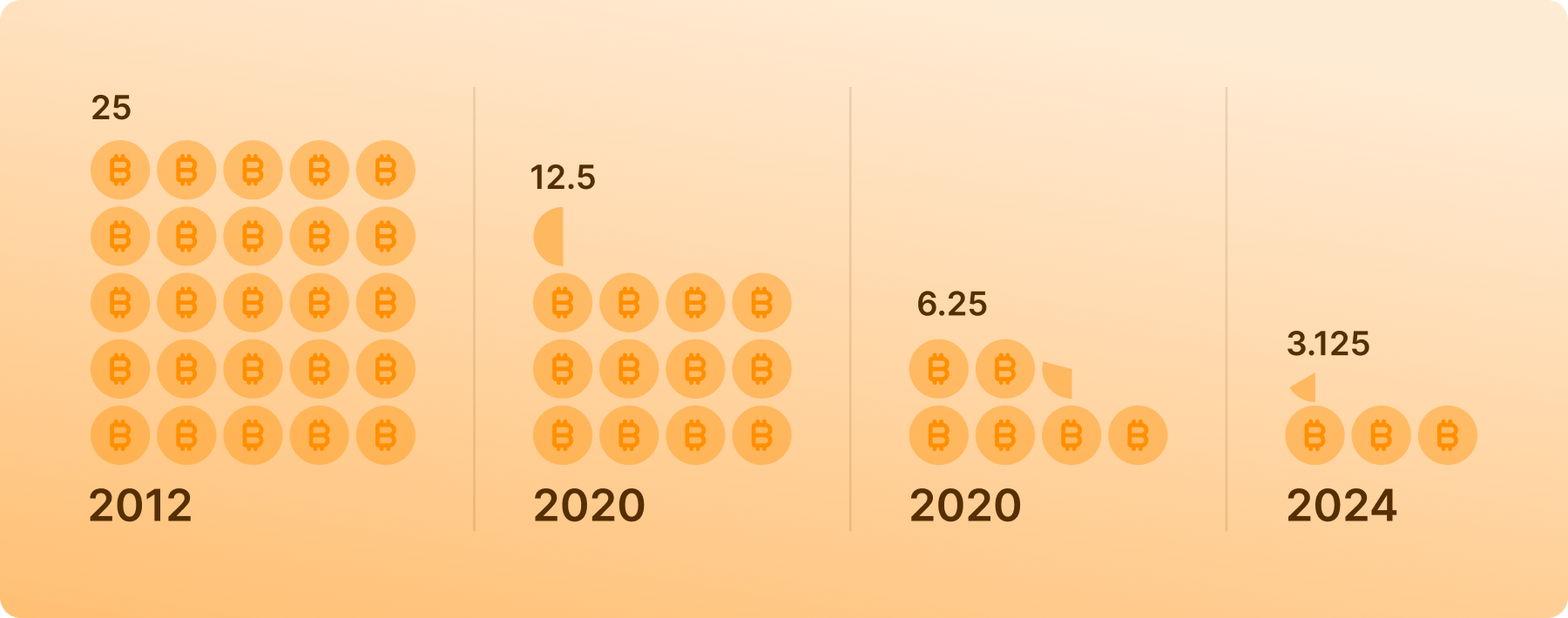
Halving is a process where the reward for each calculated block is halved, occurring every 210,000 blocks (roughly every four years).
This cycle continues until the last coin of the maximum total supply of 21 million is mined.
When Was the Last Bitcoin Halving?
The last halving occurred in 2024. The next bitcoin halving is projected in 2028.
Bitcoin Halving History Dates
By now, we only saw 4 halvings:
Halving Impact on Supply, Price, and Mining Rewards
Historically, halvings preceded major bull markets due to supply shock dynamics.
| Era | Years | Block Reward |
| 1 | 2009–2012 | 50 |
| 2 | 2012–2016 | 25 |
| 3 | 2016–2020 | 12.5 |
| 4 | 2020–2024 | 6.25 |
| 5 | 2024–2028 | 3.125 |
| 6 | 2028–2032 | 1.5625 |
| 7 | 2032–2036 | 0.78125 |
| 8 | 2036–2040 | 0.390625 |
| 9 | 2040–2044 | 0.1953125 |
| 10 | 2044–2048 | 0.09765625 |
| 11 | 2048–2052 | 0.048828125 |
| 12 | 2052–2056 | 0.0244140625 |
| 13 | 2056–2060 | 0.01220703125 |
| 14 | 2060–2064 | 0.006103515625 |
| 15 | 2064–2068 | 0.0030517578125 |
| 16 | 2068–2072 | 0.00152587890625 |
| 17 | 2072–2076 | 0.000762939453125 |
| 18 | 2076–2080 | 0.0003814697265625 |
| 19 | 2080–2084 | 0.00019073486328125 |
| 20 | 2084–2088 | 0.000095367431640625 |
| 21 | 2088–2092 | 0.0000476837158203125 |
| 22 | 2092–2096 | 0.00002384185791015625 |
| 23 | 2096–2100 | 0.000011920928955078125 |
| … | … | … (continues halving every ~4 years) |
| ~33–34 | ~2136–2140 | ~0 BTC (final fractions mined) |
4. Bitcoin as an Investment
Bitcoin is called a scam, digital gold, a bubble, the best investment, and so on. So how should we view it in 2026?
Is Bitcoin a Good Investment?
Bitcoin is highly volatile. However, despite repeated crashes and market cycles, it has delivered strong long-term returns for investors who were able to hold through the volatility.
Bitcoin Average Annual Return over the Last 10 Years
Over the past decade, the father of crypto has significantly outperformed many traditional assets, though volatility remains high.
| Year | Return |
| 2013 | +5,189% |
| 2014 | -58% |
| 2015 | +50% |
| 2016 | +125% |
| 2017 | +1,331% |
| 2018 | -73% |
| 2019 | +95% |
| 2020 | +270% |
| 2021 | +66% |
| 2022 | -65% |
| 2023 | +156% |
| 2024 | +135% |
| 2025 | -17% |
| 2026 (YTD) | -11% |
Institutional Influence
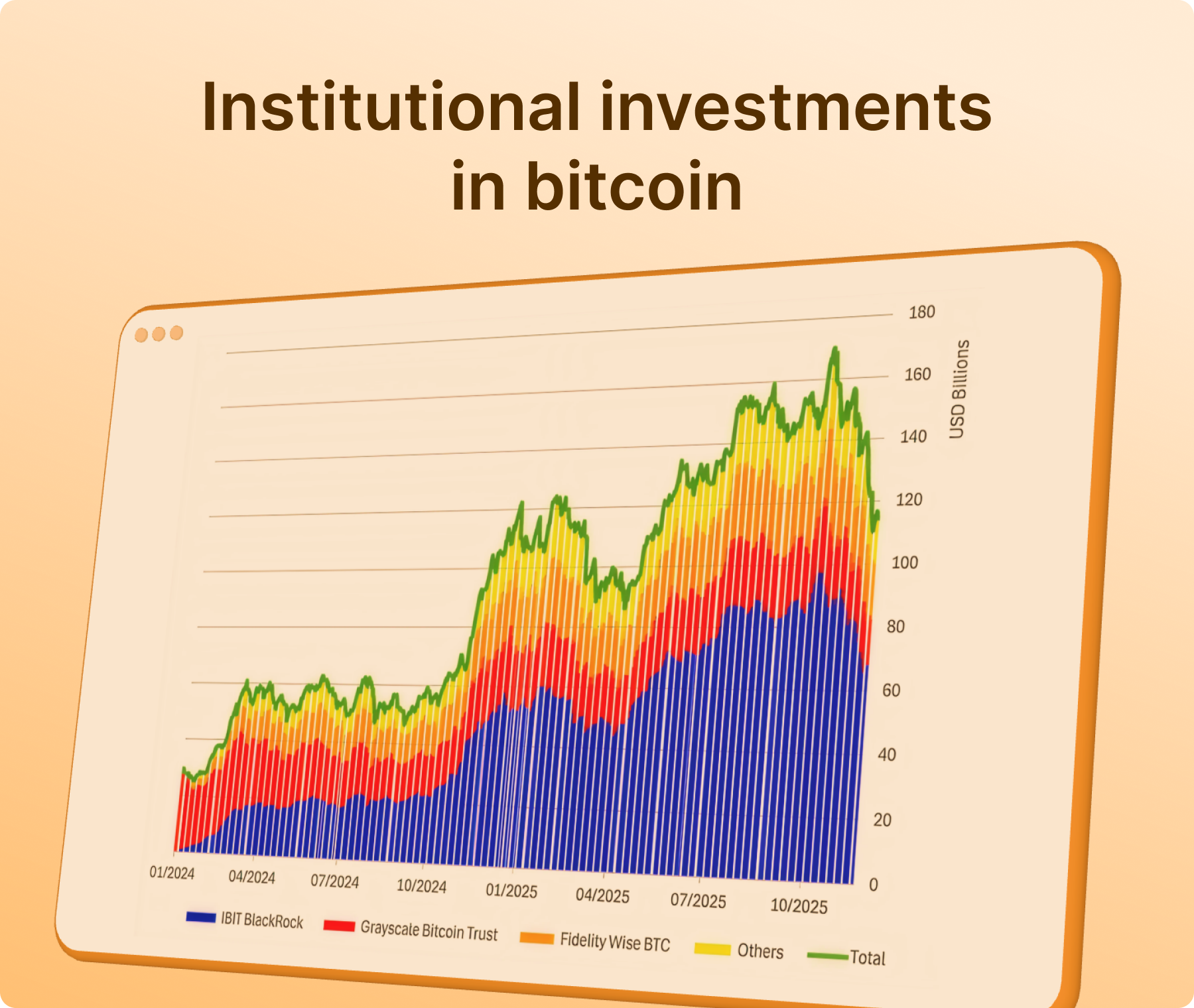
Ten years ago, Bitcoin was mostly for tech geeks. Then major financial institutions — managing pensions, ETFs, and trillions in assets — entered the market, bringing trust, structure, and capital.
One of the first bridges between traditional finance and crypto was Grayscale’s Bitcoin Trust (GBTC), which gave institutional investors regulated exposure to Bitcoin without handling wallets or private keys. At its peak, GBTC held hundreds of thousands of bitcoins.
Bitcoin ETFs and Their Market Impact
As institutional interest grew, the next logical step was Bitcoin ETFs. They allow investors to gain exposure to Bitcoin without directly owning it. Instead of buying it, they can simply purchase shares through a regular brokerage account — just like any stock.
For retirement funds and large institutions that can’t hold crypto directly, a Bitcoin ETF removes that barrier. And that opens the door to billions of dollars flowing into the market.
BlackRock Bitcoin ETF Involvement
When BlackRock — the world’s largest asset manager — entered the Bitcoin space, it sent a strong signal: this asset was being taken seriously.
That move was a turning point. And BlackRock wasn’t the only name in the conversation. Asset management giants like Vanguard, known for conservative long-term strategies, also became part of discussions around crypto exposure and ETF infrastructure.
At the same time, high-profile figures added fuel to the narrative. Elon Musk is probably one of the biggest bitcoin hypers ever. At one point, Tesla held billions of dollars worth of BTC. Musk later expressed mixed feelings — praising Bitcoin’s innovation while raising concerns about energy consumption.

Still, the fact that one of the world’s most influential CEOs held BTC on a corporate balance sheet marked a major psychological shift for the asset.
MicroStrategy Bitcoin Strategy and Influence
MicroStrategy took a different approach. Instead of creating an ETF, the company started buying Bitcoin directly — and in large amounts — putting it on its balance sheet as a long-term asset.
Basically, the company converted billions of dollars into Bitcoin, signaling it’s fine to hold Bitcoin instead of keeping excess cash in traditional reserves. That move encouraged other corporations to think differently about treasury strategy.
Bitcoin Market Behavior
To understand Bitcoin, you have to understand why it rises and falls — and what usually triggers those moves.
One popular sentiment tool traders watch is the Crypto Fear and Greed Index. It measures market emotion — from extreme fear to extreme greed — using volatility, volume, and momentum data.
Historically, extreme fear often appears near market bottoms, while extreme greed tends to show up near tops.
👉 It highlights one key fact: Bitcoin is strongly driven by emotion.
Why Is Bitcoin Dropping?
Most of the time, it’s not just one factor — it’s several things happening at once.
- Risk-off macro sentiment: When the global economy feels uncertain, investors tend to avoid risky assets. This is called a “risk-off” environment.
- Regulation headlines: BTC reacts quickly to news — especially regulatory news. If a government announces stricter crypto rules, higher taxes, or potential bans, the market may panic.
- Liquidation cascades: Many traders use leverage — meaning they borrow money to trade larger positions. If the price starts falling, those leveraged positions can get automatically liquidated (force-closed). When that happens, it creates more selling pressure. More selling pushes the price lower, which triggers even more liquidations. This chain reaction is called a liquidation cascade.
Why Is Bitcoin Going Down?
Even during strong bull markets, it often pulls back. These pullbacks are called corrections — and they are normal in speculative markets.
In simple terms, when prices rise too fast, some investors take profits. Others get nervous. Short-term traders exit their positions. This creates selling pressure.
Corrections don’t necessarily mean the long-term trend is broken — they are part of how volatile markets reset.
👀 Want to cap profits even when the asset price falls?
Read the article 👉 How to Short-Sell Bitcoin
When Did Bitcoin Start to Rise?
Historically, major rallies often began after halving events.
For example, after previous halvings, the asset entered strong upward cycles months later. The pattern isn’t immediate — but reduced supply, combined with steady or rising demand, has often pushed prices higher over time.
While history doesn’t guarantee the future, halvings have been important turning points in past cycles.
Will Bitcoin Rise Again?
No one can predict prices with certainty. The future depends on several key factors:
- Adoption — Are more people, companies, and institutions using or holding it?
- Macro conditions — Are global markets supportive of risk assets?
- Supply and demand — Is demand growing faster than new supply?
Will Bitcoin Continue to Rise?
The long-term bullish thesis is built on two main ideas: scarcity and institutional adoption.
If both scarcity and adoption continue to strengthen, supporters believe the long-term trend could remain upward.
Is Bitcoin Expected to Rise in the Future?
Many analysts describe BTC as a “digital store of value,” often comparing it to digital gold. The idea is that over time, it could act as a hedge against currency debasement and economic uncertainty.
However, Bitcoin remains volatile — price swings of 10–20% in a short period are not unusual. That makes it attractive to some investors, while too risky for others.
Ultimately, Bitcoin’s future depends on continued adoption and whether the market views it more as a long-term asset than short-term speculation.
5. How to Invest in Bitcoin Safely
Bitcoin can offer strong returns — but it also comes with volatility and risk.
How to Invest in Bitcoin for Beginners
- Only invest money you can afford to lose. Crypto can move 10–20% in a short time, and sharp drops are normal.
- Avoid emotional trading. Buying during hype often leads to regret when the price pulls back.
- Trade BTC CFDs — which means you speculate on price movements without actually holding the asset — allowing you to potentially profit even when the asset price is falling.
- Choose a reliable broker. IQ Option offers Bitcoin and other crypto assets tradable as CFDs.
👉 Read our detailed guide on how to trade crypto on IQ Option
Choosing the Right Bitcoin Wallet
A cryptocurrency wallet stores your private keys — the passwords that give access to your bitcoins. If someone gets your private keys, they control your funds.
Choose a wallet that:
- Has strong security features
- Is well-reviewed and widely used
- Allows you to control your private keys
Storage Options: Hot vs. Cold Wallets
There are two main types of wallets:
- A hot wallet is connected to the internet — such as mobile apps, exchange wallets, or browser wallets. They are convenient for frequent transactions but more exposed to hacking risks.
- A cold wallet stores Bitcoin offline, usually on a hardware device. Because it isn’t connected to the internet, it’s much harder to hack. However, losing access can be permanent — as seen in the story of James Howells, who threw away a hard drive containing 8,000 BTC.
👉 Many investors use a hot wallet for everyday use and a cold wallet for long-term storage.
Risk Management and Long-Term Strategies
Investing safely also means having a strategy.
- Dollar-Cost Averaging (DCA) — This means investing a fixed amount at regular intervals — for example, buying $100 of Bitcoin every week.
- Portfolio Diversification — Bitcoin can be part of a broader portfolio that includes stocks, bonds, or other cryptos.
- Stop-Loss Strategies — A stop-loss automatically sells your position if the price falls to a certain level. For example, if you buy at $60,000, you might set a stop-loss at $54,000 to limit potential losses. This helps protect capital — especially for short-term traders.
- Technical indicators: Crypto traders use these ones most often:
👉 Bollinger bands
👉 Moving averages
👉 Moving Average Convergence/Divergence (MACD)
👉 Stochastic Oscillator
👉 Relative Strength Index (RSI)
Bitcoin’s Long-Term Outlook
Bitcoin’s total supply is permanently capped at 21 million coins, making it one of the few truly scarce digital assets.
As more coins are mined and we move closer to the point where most of the supply is already in circulation, the amount of new coins entering the market continues to shrink. At the same time, some coins have been permanently lost due to forgotten passwords or inaccessible wallets, further reducing the effective supply.
This built-in scarcity is a key part of Bitcoin’s long-term thesis.
What Happens After Full Mining (Fully Mined Scenario)
Once fully mined:
- Mining shifts to fee-only model
- Supply is permanently capped
- Inflation becomes zero
Bitcoin will transition from a system that gradually introduces new coins to one that is fully fixed in supply. Its long-term sustainability will depend on network usage, transaction volume, and whether fee incentives are strong enough to support miners securing the network.
The Future of Decentralized Finance (DeFi) and Bitcoin’s Role
BTC remains the foundational asset of the crypto ecosystem. While DeFi expands across other chains, Bitcoin often acts as the reserve asset.
Bottom Line
The questions how many bitcoins have been mined, how many bitcoins are left to be mined, and when will last bitcoin be mined are central to understanding Bitcoin’s economic model.
By some projections, nearly 99% of all bitcoins could be mined well before 2035, further tightening new supply entering the market. Even now, with 95% of supply in circulation, scarcity is no longer theoretical.
Now is the time in history when supply is becoming increasingly fixed — and market moves are driven more than ever.