



What Is a Moving Average
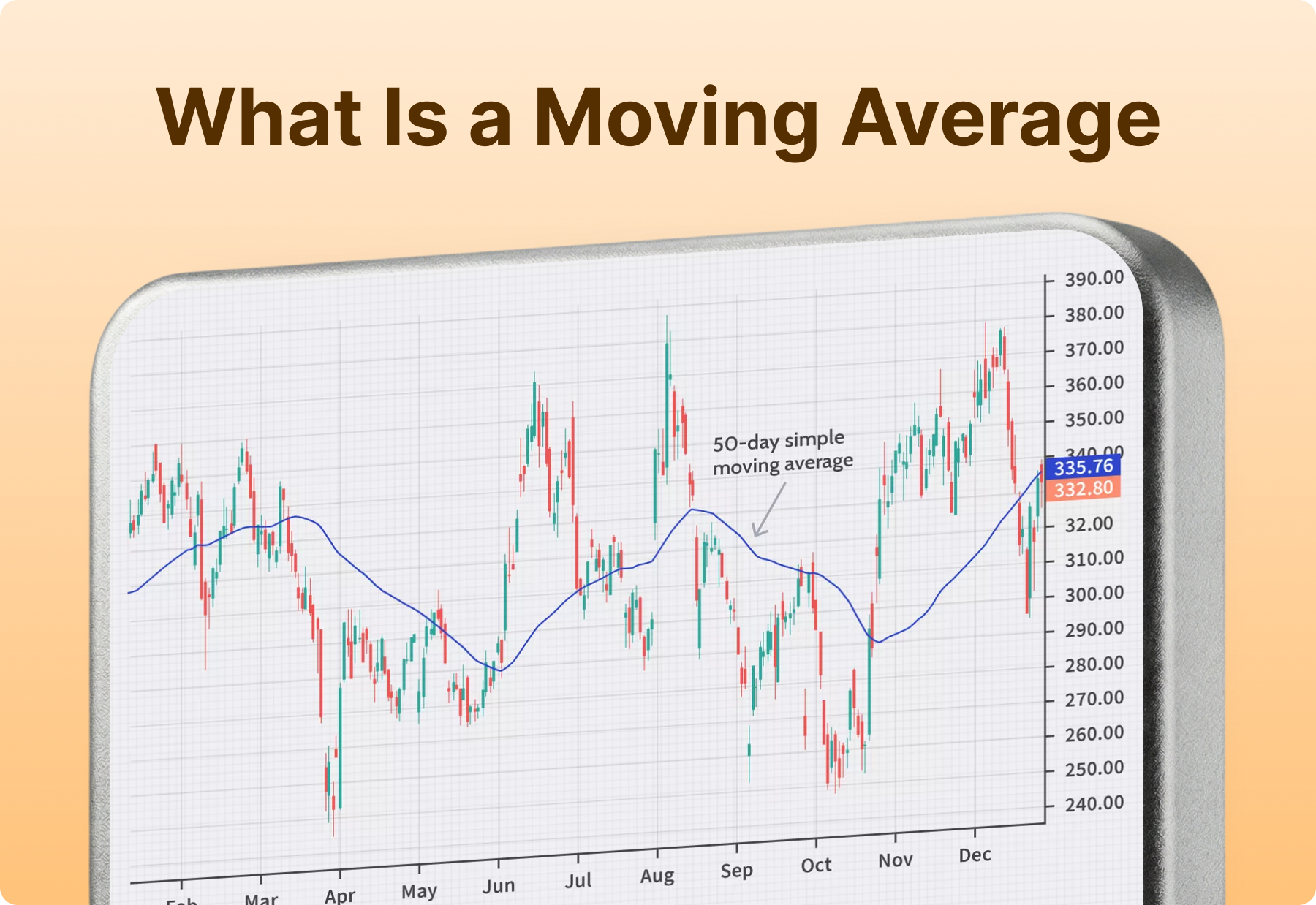
A moving average is a line that shows the average price of an asset over a selected number of periods. It removes sharp fluctuations and makes the overall direction easier to read. When the market is noisy or unstable, the moving average helps traders see the true trend beneath the short term movement.
The moving average updates with each new candle. As new prices appear, older prices drop out of the calculation. This gives the line a smooth, steady shape. Traders use this shape to understand whether the market is trending up, trending down or moving sideways.
Why Moving Averages Matter in Trading
Moving averages help traders simplify the market. Price often moves in sharp swings that make direction unclear. A moving average removes much of this noise and shows a clearer path.
Traders use moving averages to identify trends. When the moving average slopes upward, the market often follows an uptrend. When it slopes downward, the market usually follows a downtrend. This helps traders avoid trading against the dominant direction.
Moving averages also help with timing. They show when price pulls back into the trend and when it might be ready to continue. This makes it easier to plan entries, exits and stop loss levels. A moving average does not predict the future, but it guides traders toward more consistent decisions.
Types of Moving Averages
Moving averages come in different forms. Each type reacts to price differently and gives traders a slightly different view of the market. Knowing how they work helps you choose the best one for your strategy.
- Simple Moving Average – The simple moving average uses equal weight for each period in the calculation. It reacts slowly to new price changes. Traders use it to see long term direction and major trend shifts.
- Exponential Moving Average – The exponential moving average gives more weight to recent prices. It reacts faster to market movement. Traders use it for quick signals, early entries and short term trend confirmation.
- Weighted Moving Average – The weighted moving average adds stronger weight to specific candles. It creates an even faster response than the exponential version. Some traders use it to catch very early changes in momentum.
- Smoothed Moving Average – The smoothed moving average uses a longer smoothing method. It reduces noise even more than the simple average. This makes it useful for slow and steady trend analysis.
Key Settings for Moving Averages
Moving averages work differently depending on the number of periods you choose. Short settings react fast. Long settings react slowly. The right choice depends on your trading style and the time frame you use.
Short Term Moving Averages
These include settings like 5, 9 or 10 periods. They move closely with price and give early signals. Short averages work well for fast trades, but they can produce more noise.
Medium Term Moving Averages
Settings such as 20, 30 or 50 periods fall into this group. They balance speed and stability. Traders use them to confirm trend direction and spot pullbacks during active markets.
Long Term Moving Averages
Settings like 100 or 200 periods show major market direction. They react slowly but offer strong confirmation. Long averages help traders avoid weak signals and stay aligned with broader trends.
How Moving Averages Identify Trends
Moving averages help traders see trends that are not obvious in raw price movement. The slope of the line is the first sign. When the moving average points upward, the market often moves in an uptrend. When it points downward, the trend is usually bearish.
Another signal comes from price positioning. If price stays above the moving average, the market often holds a bullish structure. If price stays below the moving average, the structure is usually bearish. This simple rule helps traders avoid trading against the main direction.
Moving averages also show trend strength. A steep slope suggests strong momentum. A flat slope signals a weak or sideways market. When price crosses the moving average repeatedly, the market has no clear direction. Traders often wait for cleaner signals before entering trades.
Popular Moving Average Strategies
Moving averages can be used in many ways. Some strategies are simple. Others combine multiple signals. These are the most common methods traders use.
Single Moving Average Trend Strategy
This strategy uses one moving average to confirm direction. When price stays above the line, traders look for buys. When price stays below the line, traders look for sells. It is simple and works well in clear trending markets.
Moving Average Crossover
A crossover happens when a fast moving average crosses a slow one. When the fast average crosses above the slow average, it often signals a potential uptrend. When it crosses below, it can signal a downtrend. Crossovers help traders catch early trend changes but can produce false signals in sideways markets.
Support and Resistance With Moving Averages
Moving averages often act as dynamic support and resistance levels. In an uptrend, price may pull back to the moving average before moving higher again. In a downtrend, price may rise to the moving average before continuing lower. Traders use these pullbacks for entries.
Pullback Entries Using Moving Averages
Traders wait for price to move away from the trend and then return to the moving average. If the trend is up, the pullback creates a buying opportunity. If the trend is down, it becomes a selling opportunity. This method helps traders enter trends with better timing.
How to Use Moving Averages on Different Assets
Moving averages behave differently depending on the asset. Each market has unique rhythm, volatility and reaction speed. Adjusting your settings to the asset can improve accuracy and timing.
- Forex – Forex pairs move smoothly and often follow clear trends. Short and medium moving averages work well here because forex reacts strongly to economic news. Traders often use 10, 20 and 50 period averages to confirm direction and find pullbacks.
- Stocks – Stocks can show sharp jumps during earnings or news. Medium and long moving averages help filter this noise. Traders often use 50 and 200 period lines to see long term trends and avoid reacting to short term spikes.
- Crypto – Crypto is highly volatile. Fast moving averages can react too quickly and give many false signals. Many traders use medium and long settings, such as 20, 50 and 100 periods, to smooth the movement and find more stable entries.
- Commodities – Commodities such as oil or gold respond to global events. Moving averages help track these shifts. Medium term settings are common because they balance speed and stability. Traders use them to follow the broader trend without overreacting to sudden spikes.
Combining Moving Averages With Other Indicators
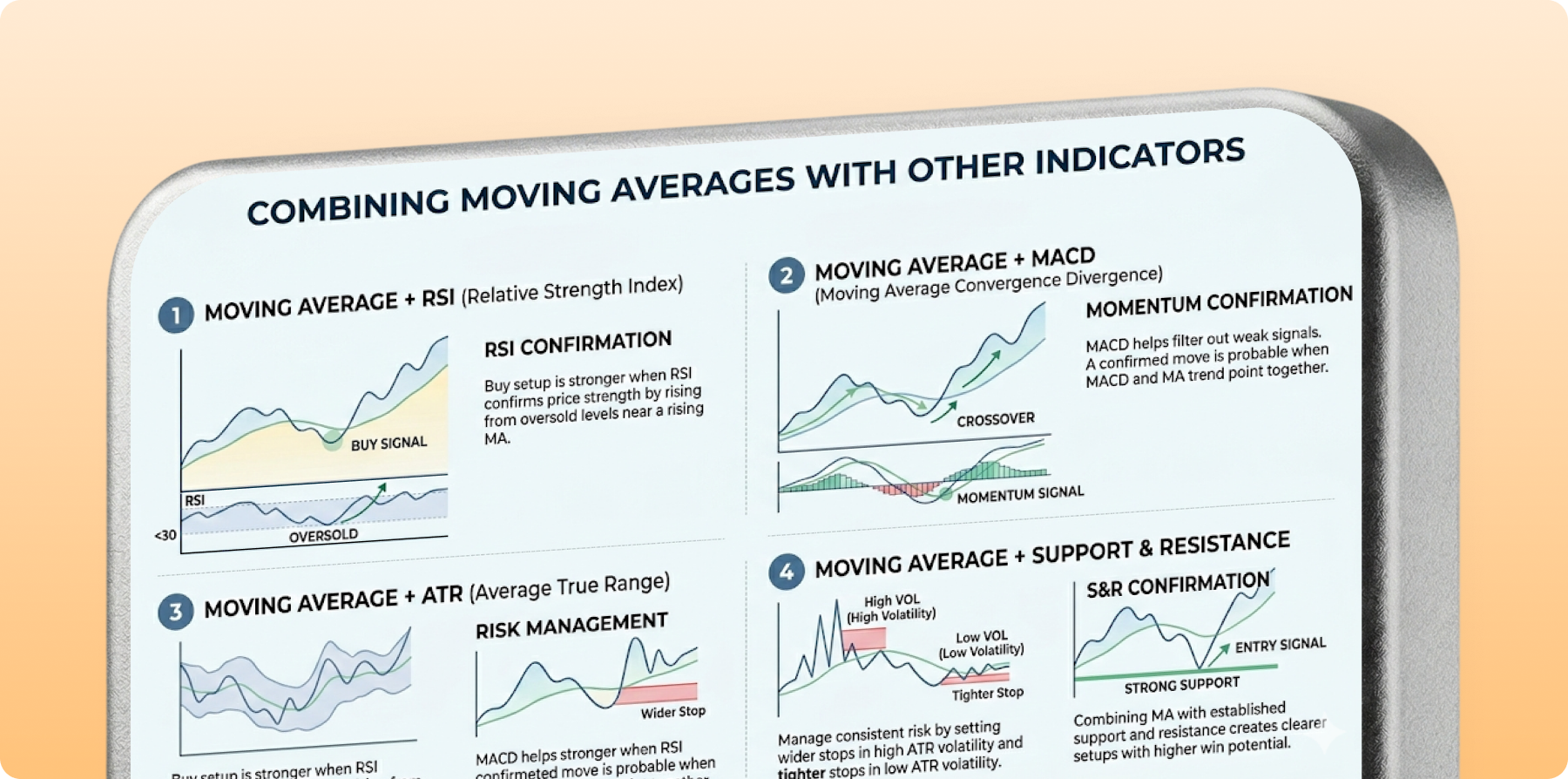
Moving averages work well on their own, but they become stronger when combined with other tools. Adding confirmation reduces false signals and improves timing.
RSI
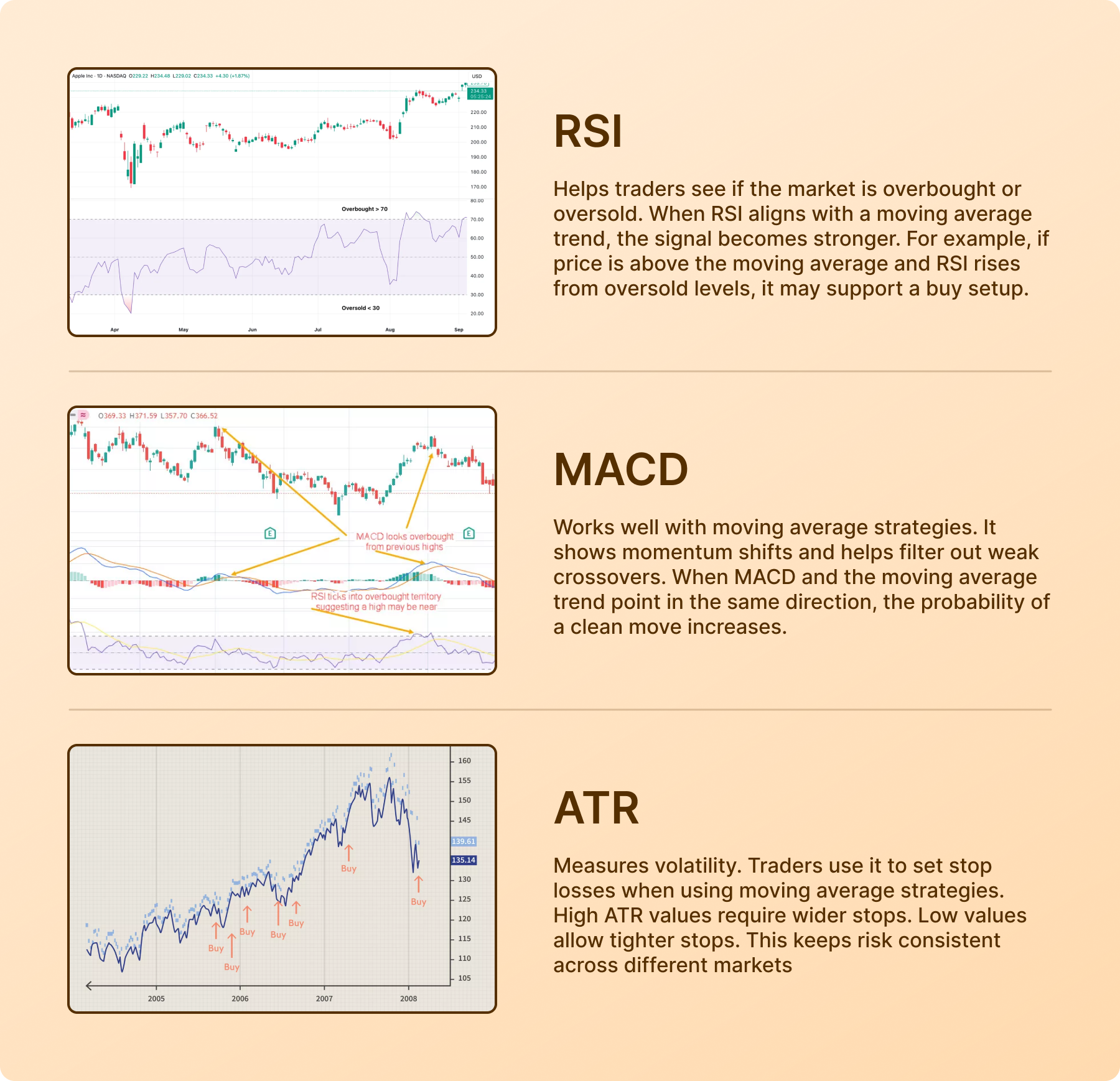
RSI helps traders see if the market is overbought or oversold. When RSI aligns with a moving average trend, the signal becomes stronger. For example, if price is above the moving average and RSI rises from oversold levels, it may support a buy setup.
MACD
MACD works well with moving average strategies. It shows momentum shifts and helps filter out weak crossovers. When MACD and the moving average trend point in the same direction, the probability of a clean move increases.
ATR
ATR measures volatility. Traders use it to set stop losses when using moving average strategies. High ATR values require wider stops. Low values allow tighter stops. This keeps risk consistent across different markets.
Support and Resistance
Combining moving averages with support and resistance creates clearer setups. If price pulls back to a moving average near a strong support level, it can create a high quality entry opportunity.
Common Mistakes With Moving Averages
Many traders use moving averages, but not everyone uses them correctly. These mistakes are common and can reduce the accuracy of the signals.
Using Too Many Moving Averages
Adding several moving averages to the same chart creates confusion. When the screen becomes crowded, signals overlap and lose clarity. Two or three lines are usually enough for most strategies.
Relying Only on Crossovers
Crossovers look simple, but they can give late or false signals in slow markets. When the price moves sideways, the averages cross many times without a real trend. Traders need extra confirmation to avoid weak setups.
Ignoring Volatility
Moving averages react differently during high volatility. Fast markets create sharp moves that can cause early entries or exits. Ignoring volatility can lead to stop outs or sudden losses. Tools like ATR can help adjust stops and protect trades.
Trading Against the Trend
Some traders enter trades just because price touches a moving average, without checking overall direction. This leads to entries against the trend. Moving averages work best when they confirm a strong, established trend.
Moving Averages on the IQ Option Platform
The IQ Option platform makes it easy to use moving averages on any asset. You can add the indicator directly from the chart, adjust the period and choose the type that fits your strategy. The interface updates the line in real time, so you can see how price interacts with it as the market moves.
Traders can also change colors, thickness and smoothing settings to make the chart clearer. This helps you follow the trend more easily and avoid confusion during fast markets. You can combine moving averages with other indicators such as RSI or MACD with just a few clicks.
The practice account allows you to test moving average strategies without risk. You can experiment with different settings, time frames and asset classes. This helps you learn how each moving average reacts and how it influences your entries and exits. The platform’s charting tools make it simple to study trend behavior and build confidence before trading with real funds.
Conclusion
Moving averages are simple but powerful tools that help traders see direction, reduce noise and plan better entries. They work on all assets and can be adapted to any trading style. By choosing the right type and period, traders can follow trends more clearly and avoid trading against the market.
Moving averages work even better when combined with other indicators such as RSI, MACD or ATR. They provide confirmation and help filter out weak signals. With proper risk control and clear rules, moving averages can become a reliable part of any trading plan. On the IQ Option platform, they are easy to set up, test and use across different markets.