



Trading psychology is a big determining factor for success in trading. Many new traders overlook trading indicators and strategies while underestimating the power of trading psychology. Fear, greed, and impatience are major factors, compared to many other technical tools.
Early knowledge of common psychological pitfalls can save newbie traders from developing expensive habits. Having a strong mindset promotes a disciplined approach and helps a trader survive and move ahead on financial markets.
What Is Trading Psychology
Trading psychology refers to how emotions, beliefs, and mental habits influence trading decisions. It shapes how traders react to wins, losses, risk, and uncertainty. Even a solid strategy can fail when emotions take control.
Markets create pressure. Price moves trigger fear, greed, hope, and frustration. Trading psychology determines whether a trader follows a plan or reacts impulsively. Over time, mindset often separates consistent traders from those who struggle.

Why Beginners Struggle With Psychology
Beginners struggle with trading psychology because they have limited exposure to real market stress. Losses often feel larger than expected, while early wins can create false confidence. Without experience, emotions easily override logic.
Unrealistic expectations also play a major role. Many beginners expect fast profits and smooth results. When reality differs, frustration and fear increase, leading to poor decisions.
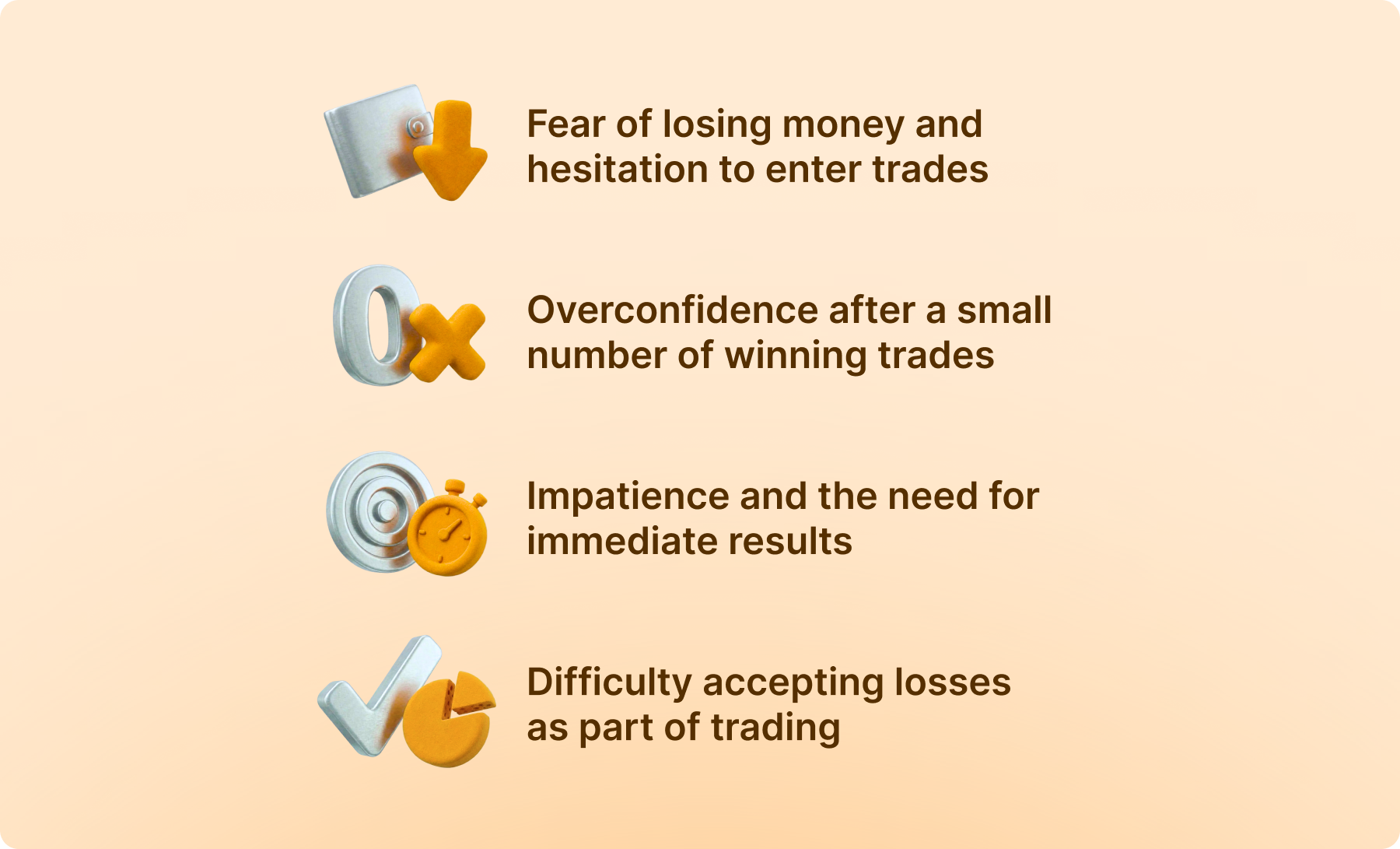
Common psychological challenges for beginners include:
- Fear of losing money and hesitation to enter trades
- Overconfidence after a small number of winning trades
- Impatience and the need for immediate results
- Difficulty accepting losses as part of trading
Fear and Greed in Trading
Fear shows up when a trader thinks the next loss will be bigger. It often leads to late entries, early exits, or no action at all. The trader sees a valid setup but hesitates. Then the trade runs without them. After that, frustration grows.
Greed usually appears after a win or a strong move. The trader increases the size too fast and also holds positions past their target. They stop taking planned profits. They start chasing the maximum outcome.
The fix starts with risk. Smaller risk per trade reduces emotional intensity, also clear exit rules reduce second guessing. A rule like “take partial profit at 1R, move stop to break even” can lower stress and protect discipline.
Overconfidence After Early Wins
Early wins can teach the wrong lesson. Beginners may think they have solved the market, then take more trades and take lower quality setups. They stop respecting the checklist.
Overconfidence often shows in sizing. A trader doubles risk after a few winners. The next normal losing trade then feels like a shock. Confidence collapses. The trader tries to win it back quickly.
The fix is a stable process. Keep risk fixed for a set number of trades. Use a minimum sample rule. For example, no changes to risk until 50 trades are logged. Confidence should come from execution quality, not profit.
Revenge Trading
Revenge trading is a response to emotional pain. The trader wants to erase a loss fast. They stop waiting for their setup. They enter trades with weak signals. They also widen stops or remove them.
This pattern usually accelerates, one loss becomes two. The trader increases the size and the account takes a large hit. The real damage is not only financial, it is also trust in their process.
The fix is a hard stop rule, such as setting a daily loss limit, adding a cooldown after a loss. For example, no new trade for 20 minutes. Use that time to review the last trade against the checklist.
Lack of a Trading Plan
Without a plan, every decision becomes reactive. The trader enters because price is moving. They exit because they feel nervous. They move stops because they hope. This creates random results.
A plan is not a long document, but a small set of rules. It defines setup, entry trigger, stop placement, target logic, and risk. It also defines when not to trade.
The fix is clarity, just write one setup on one page. Add screenshots of valid examples, also add a checklist with yes or no items. If any item is no, the trade is skipped.
Poor Risk Management
Poor risk management creates psychological pressure. When risk is too high, the trader cannot think clearly. Small price swings feel threatening. They micro manage trades. They also exit early to avoid discomfort.
High risk also magnifies losing streaks. A normal drawdown becomes account damage. Then emotions rise. Discipline falls. Mistakes increase.
The fix is position sizing rules. Risk a small fixed percent per trade. Many beginners use 0.5 percent to 1 percent. Use a hard stop loss on every trade. Add a weekly loss cap to prevent spiral losses.
Chasing Losses and Missed Trades
Chasing losses happens after a setback. The trader feels behind. They try to force the next win. They take marginal trades. They accept poor entries. They ignore market context.
Fear of missing out works in a similar way. The trader sees a move. They enter late. The stop has to be wider. The reward is smaller. The trade becomes low quality from the start.
The fix is a wait rule. Only trade when the setup is complete. Add entry criteria that prevent late entries. For example, no entry if price already moved more than X percent from the level. Focus on the next clean opportunity.
Overtrading
Overtrading is often a symptom, not a cause. It can come from boredom. It can come from anxiety. It can also come from a need to recover losses. The trader trades to feel in control.
The cost is hidden. More trades increase fees and spreads. They also drain attention and Decision fatigue builds. Execution gets sloppy. Mistakes rise late in the session.
The fix is trade limits and session structure. Set a max trades per day. Set a max screen time. Trade only during defined hours. Use a checklist that filters out weak setups.
Ignoring Losing Streaks
Losing streaks are normal. Beginners often respond with denial. They think the next trade will fix it. They keep trading without review. They also change rules mid-stream.
This creates two problems. The first is continued losses and the second is loss of data quality. If rules keep changing, the trader cannot learn what works.
The fix is a pause protocol. After a set number of losses, stop trading. Review the last trades. Check for rule breaks and market condition mismatches. Resume only when the setup quality returns and the rules are clear.
How to Build Strong Trading Discipline
Trading discipline is built through structure and repetition. Each step below reduces emotional influence and increases consistency when markets become stressful.
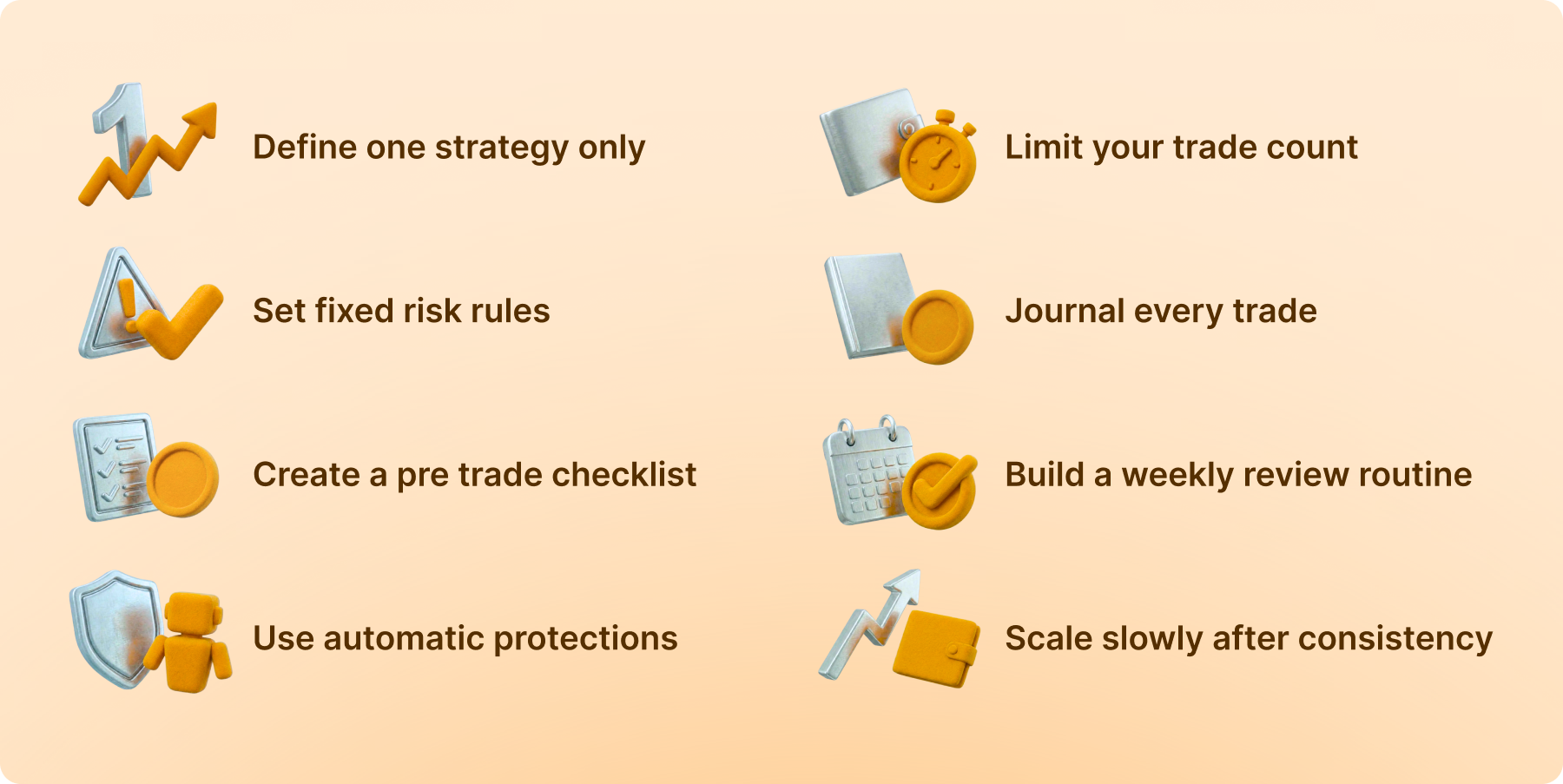
- Define one strategy only. Choose a single setup and document every rule in detail. Specify exact entry triggers, exit conditions, stop placement, and market context. Avoid mixing strategies, since switching approaches breaks focus and discipline.
- Set fixed risk rules. Decide the maximum percentage of capital to risk per trade and never exceed it. Define a daily or weekly loss limit that forces you to stop trading. Fixed risk keeps emotions under control during losing periods.
- Create a pre trade checklist. Write a checklist that must be completed before every trade. Include trend direction, key levels, volatility conditions, and risk to reward. This checklist slows decisions and prevents impulsive entries.
- Use automatic protections. Place stop loss and take profit orders immediately after entering a trade. This removes the temptation to adjust trades emotionally. Automation protects discipline when fear or hope appear.
- Limit your trade count. Set a maximum number of trades per session or day. Fewer trades increase selectivity and reduce mental fatigue. Trade limits also prevent revenge trading after losses.
- Journal every trade. Record not only technical details but also emotions and rule adherence. Journaling exposes patterns in behavior that are invisible in profit charts. Review journals regularly to correct mistakes.
- Build a weekly review routine. Analyze performance at the end of each week. Focus on rule violations, not profits. Identify repeated discipline failures and address them with specific adjustments.
- Scale slowly after consistency. Increase position size only after a proven period of disciplined execution. Scaling should be gradual and rule based. Discipline must grow before size increases.
Practical Tips to Improve Trading Psychology
Improving trading psychology requires daily habits, not motivation. Small, consistent actions reduce emotional reactions and build long term control.
- Follow a fixed daily routine. Start and end trading at the same time each day. Routines reduce impulsive behavior and prepare the mind for focused execution.
- Use a trading journal consistently. Write down every trade with reasoning and emotions. Journaling exposes repeated psychological mistakes that charts alone cannot show.
- Prepare before the trading session. Mark key levels, check market conditions, and define acceptable setups in advance. Preparation lowers stress and reaction based decisions.
- Review trades after the session. Analyze whether rules were followed, not whether money was made. Process based reviews strengthen discipline over time.
- Limit screen exposure. Watching price constantly increases emotional pressure. Step away after placing trades to avoid interference and second guessing.
Realistic Expectations for Beginners
Many beginners enter trading with unrealistic expectations shaped by social media and short term success stories. This creates pressure to perform quickly and consistently, which rarely reflects real market conditions. Trading is a skill based profession that requires time, repetition, and emotional control.
Losses are part of the learning curve. Even profitable traders experience drawdowns and extended losing periods. Beginners must accept that mistakes and setbacks are unavoidable. The goal in early stages is not to earn income but to protect capital and gain experience.
Progress should be measured by improved discipline, better risk control, and fewer emotional mistakes. Consistency develops slowly through practice and review. Traders who focus on survival and learning build a foundation for long term performance.
How Psychology Improves With Experience
Psychology improves as exposure to real market conditions increases. Repeated wins and losses reduce emotional intensity over time. Traders begin to react less and execute more.
Experience builds pattern recognition. Traders learn which setups are worth attention and which are not. This reduces overtrading and hesitation. Confidence shifts from hoping for outcomes to trusting a process.
Losses also become easier to accept. Instead of triggering frustration, they are treated as data. This mindset lowers stress and supports long term consistency.
Final Thoughts on Trading Psychology
the aim of Trading psychology is never an innate talent of traders. Rather, it is built through experience, organization, and repeated interaction with uncertain environments. Every trade is an examination of patience, discrimination, and emotional regulation, even during periods of losses.
New traders can expect errors and emotional responses. These incidents are neither failures nor mistakes but feedback. The traders who assess their actions, reduce their rules, and keep an eye on the process can improve consistently. Having a solid psychological grounding is essential in a market environment of risk, consistency, and long-term survival.