



Commodities trading is an integral part of the worldwide financial system. It links natural resources, producers and traders through market prices and speculation. Ranging from energy and precious metals to agricultural commodities, commodities have a direct impact on people’s lives and the worldwide economy.
For traders, commodities offer a chance to diversify their portfolios and ride the macroeconomic wave. In this article, we will explore the fundamentals of commodities trading and strategies and give a step-by-step guide to beginners on learning more about the commodities market.
What Is Commodities Trading
Commodities trading refers to buying and selling raw materials in financial markets. These materials include energy products, metals and agricultural goods. Traders do not usually deal with physical delivery. They trade price movements through financial instruments.
There are two main ways commodities are traded. Physical trading involves producers and buyers who need the actual commodity. Financial trading focuses on speculation and hedging. Most retail traders participate in the second type.
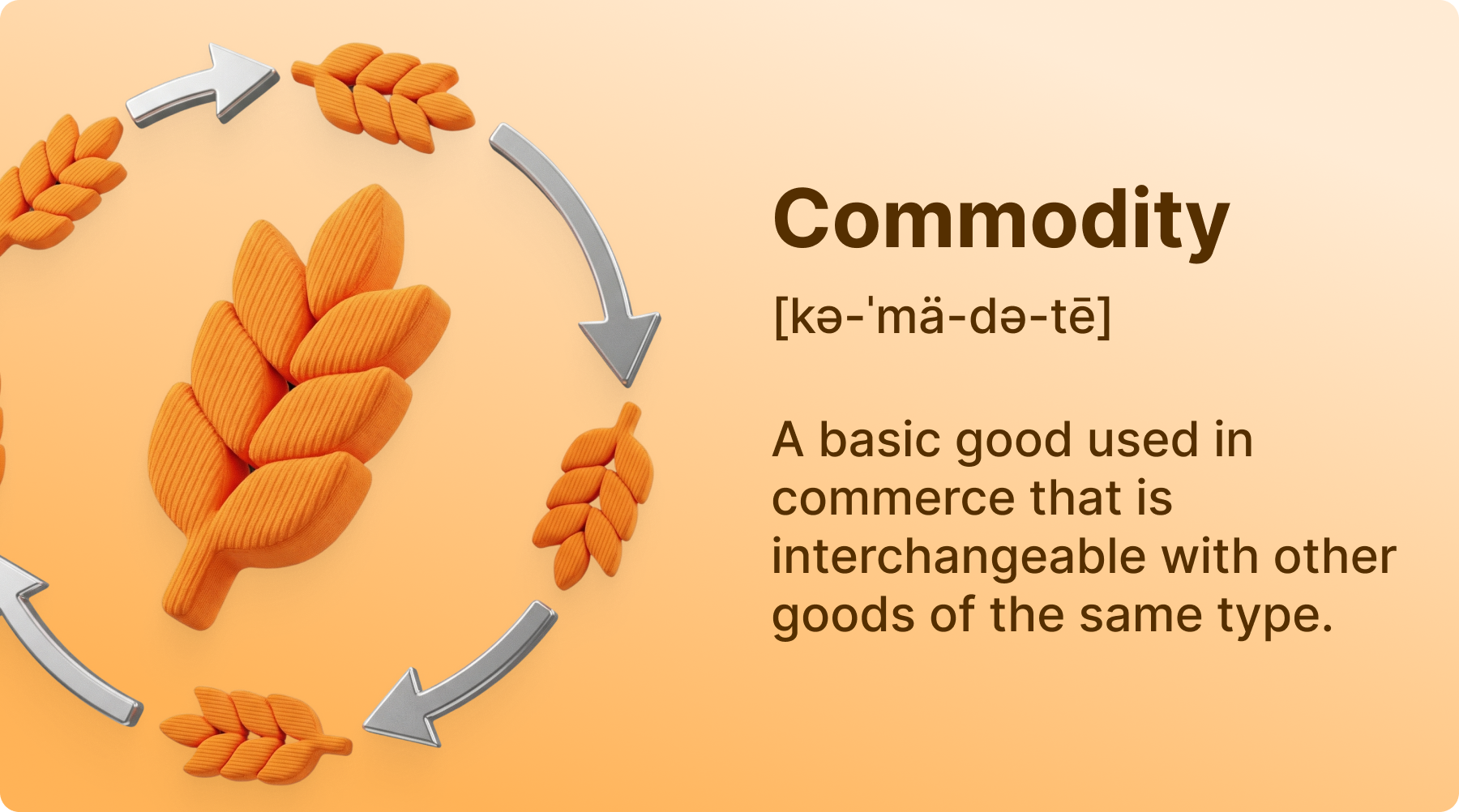
Commodities are standardized. One unit of gold, oil, or wheat has defined quality and quantity. This standardization allows commodities to be traded globally on regulated exchanges. Prices are transparent and driven by global supply and demand.
Unlike equities, commodities are not tied to company performance. Their value depends on production levels, consumption needs and external factors such as weather or geopolitics. This makes commodities highly sensitive to macroeconomic changes.
How Commodities Trading Works
Commodities trading occurs through global commodity exchanges or over-the-counter markets. These are platforms where buyers and sellers of commodity contracts come together to trade their products. Commodities are sold or bought according to their price determined by the forces of demand and supply in the global market.
Most retail traders do not trade physical commodities. Traders use financial instruments that are linked to the prices of commodities in the market to trade in commodities.
Common ways to trade commodities include:
- Trading in futures contracts through commodity exchanges
- Trading in contracts for difference (CFDs) linked to commodity prices
- Trading in spot market products through brokers
The process of trading in commodities involves placing orders through a broker. Traders specify the nature of the order, the amount to be traded and the level of risk involved in the trade. The prices are affected by global factors, inventory levels and demand levels.
Types of Commodities
Commodities are normally classified according to their usage and places of origin. This classification helps commodity traders to understand what influences their prices and their respective market behaviors.
Hard Commodities
Hard commodities refer to natural resources that are mined from the earth. Hard commodities are highly sensitive to global demand, cost of production and geopolitical events.
The most popular hard commodities are metals and energy commodities. Gold and silver are considered safe-haven assets during times of economic uncertainty. Oil and natural gas are directly linked to global economic growth, transportation and industrialization.
The prices of hard commodities can fluctuate rapidly in response to supply chain disruptions, political instability, or changes in production levels. This makes hard commodities attractive and volatile.
Soft Commodities
Soft commodities refer to agricultural commodities that are grown or produced through farming. The prices of soft commodities are highly sensitive to weather patterns, seasonal changes and crop production.
The most popular soft commodities are wheat, corn, coffee, sugar and cotton. Unlike metals or energy commodities, these commodities are perishable and weather-sensitive, such as droughts or floods.
Soft commodities tend to be highly seasonal. Traders who understand the seasonality of soft commodities can better prepare for times of high volatility.
What Moves Commodity Prices
Commodity prices are influenced mostly by supply and demand. When supply is low and demand remains high, prices increase. Conversely, prices fall when supply rises and demand falls. This cycle is always in motion and responds to global economic activity.
One of the major influences on commodity prices is production. The production of mined commodities, oil and crops significantly impacts supply. If production is disrupted in any of these areas, prices can move. This includes strikes, weather and equipment failure.
The weather is also an important factor, especially with agricultural commodities. Weather forecasts can move prices even before an event occurs. Weather can cause drought, flooding and extreme temperatures, which can severely impact supply. Weather can cause shortages in some commodities.
Geopolitics also plays an important role in impacting commodity prices. Wars, sanctions and trade barriers can severely affect supply. Energy commodities are particularly sensitive to geopolitical activity.
Economic indicators also impact commodity prices. Inflation, interest rates and economic growth forecasts can influence demand. Economic growth can increase demand for commodities.
Seasonality in Commodities Trading
Seasonality has significant importance in commodities trading. Unlike stocks, commodities have an association with the production cycle, the time taken for harvesting and the time taken for consumption.
Among commodities, agricultural commodities have the highest seasonality. The planting and harvesting seasons have an effect on the supply of commodities several months ahead. This can result in higher prices when there is more supply uncertainty and lower prices when the supply position becomes clearer.
Energy commodities, like oil, have higher demand during peak travel seasons. Similarly, natural gas prices have higher demand during colder months.
However, it is essential to understand that seasonality does not necessarily determine the direction of prices. It can be used as an essential tool to avoid surprises. If the seasonal trend coincides with other factors like supply and demand, the trading strategy can be more effective.
Commodities Trading vs Other Markets
Commodities trading is different from other markets in terms of price movements and factors that influence them.
Commodities Trading vs Stock Trading
Stock prices are directly related to the performance of companies. Stocks are influenced by earnings, management changes and industry news. Commodities are not related to any specific company. Prices are influenced by global demand and supply.
Commodities tend to react quickly to macroeconomic events. Commodities are influenced by weather, politics and economic announcements. Stock prices tend to move slowly unless there is breaking news.
Commodities Trading vs Forex Trading
Forex trading is primarily based on currency pairs and interest rate differentials. It is influenced by central bank policies. Commodities are more influenced by physical supply and demand requirements.
Forex markets are very liquid and operate almost around the clock. Commodities tend to have times of low liquidity and sudden price movements around announcements and news events.
Basic Commodities Trading Strategies
Commodities trading strategies focus on macro behavior and price reaction. Unlike stocks, commodities often move in longer cycles. Traders must adapt to volatility and external events.
Trend Following
Trend following is one of the most common strategies in commodities trading. Commodities often develop strong directional moves driven by supply shortages or rising demand. Traders look to enter in the direction of the dominant trend.
This strategy usually relies on:
- Higher highs and higher lows in uptrends
- Lower highs and lower lows in downtrends
- Pullbacks into key levels before continuation
Trend following works well in energy and metals during strong economic or geopolitical phases.
Range Trading
Range trading is used when commodity prices move between clear support and resistance levels. This often happens when supply and demand are balanced and no major news is present.
Traders buy near support and sell near resistance. Risk must be controlled tightly because breakouts can happen suddenly in commodity markets.
News Based Trading
News plays a major role in commodities. Inventory reports, weather updates and geopolitical headlines can move prices quickly.
News based trading focuses on reacting to:
- Oil inventory reports
- Crop forecasts
- Central bank or government decisions
- Geopolitical developments
This strategy requires discipline and fast execution.

Risk Management in Commodities Trading
Risk management is essential for commodities trading because commodity prices tend to fluctuate and change frequently. Commodity prices can change abruptly due to various factors like news, weather and even global events.
Moreover, commodity prices tend to be more volatile than prices of other assets. As a result, position sizes must be carefully managed. In many cases, a smaller percentage of capital is allocated for trading compared to stock trading and foreign exchange trading.
Some of the most important principles for effective risk management for commodities trading are:
- Smaller position sizes for volatility management
- Effective stop loss management by going beyond key technical and fundamental levels
- No over-exposure to a specific commodity
- Precautions while dealing with major reports and news releases
Commodities traders who succeed are those who prioritize survival. They must be able to withstand potential losses and stay long enough to ride through big moves.
Common Commodities Trading Mistakes
Many traders struggle in commodity markets because they underestimate volatility. Prices can move fast and without warning. This often leads to emotional decisions and poor risk control.
One frequent mistake is overleveraging. Traders use large position sizes to chase profits. When the market moves against them, losses grow quickly. Commodities punish this behavior more than most markets.
Another common issue is ignoring fundamentals. Commodities are driven by supply, demand and external events. Trading only technical patterns without understanding the broader context can lead to false signals.
Typical mistakes include:
- Trading during major news without preparation
- Holding positions through high impact reports
- Using stops that are too tight for volatile markets
- Focusing on one commodity only
- Reacting emotionally to sudden price spikes
Avoiding these mistakes improves consistency. Discipline and preparation matter more than prediction.
Is Commodities Trading Good for Beginners
Commodities trading can be suitable for beginners, but it comes with challenges. The market is driven by global events, supply disruptions and macroeconomic data. This can create sharp and sudden price moves.
Beginners often benefit from learning commodities because the price drivers are clear. Supply and demand play a central role. Economic reports, weather data and geopolitical news have direct impact.
There are also risks. Volatility is usually higher than in stock markets. Beginners must learn risk control early and avoid large positions.
Commodities trading suits beginners who:
- Want exposure to global macro trends
- Are comfortable learning fundamentals
- Use strict risk management
- Prefer fewer but higher-quality trades
Starting slowly and focusing on one or two commodities helps reduce mistakes.
How to Start Commodity Trading
Starting commodities trading requires a trader has to be well-prepared and follow a well-structured approach. To start with, a beginner has to focus on learning the basics of the commodity market before trading with real capital. Commodity trading is affected by global events and as such, the context is more important than speed.
To start commodity trading, a trader has to look for a regulated broker that offers access to the major commodity markets. To start with, a trader has to trade the most liquid commodity markets, for example, gold or oil.
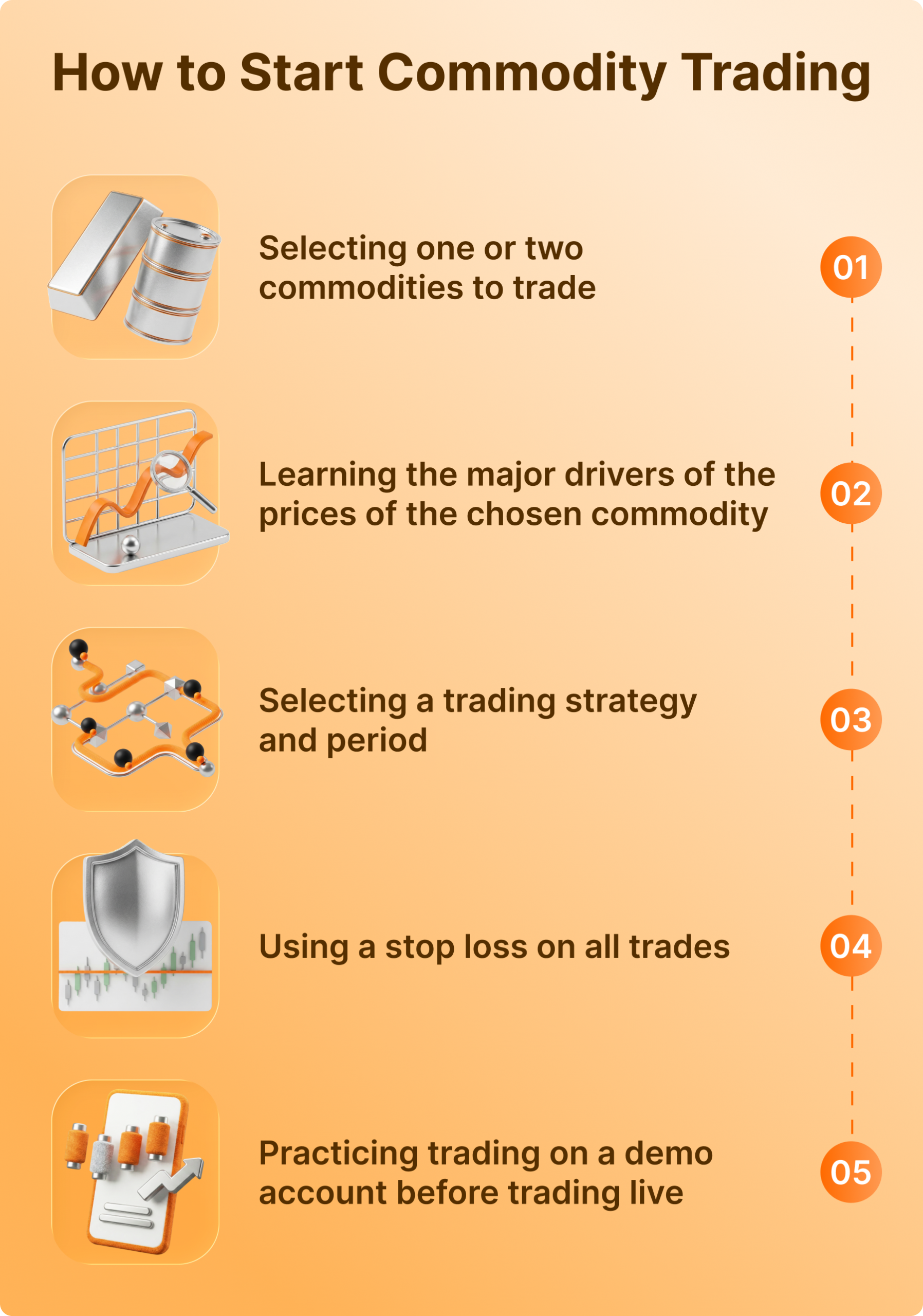
- Selecting one or two commodities to trade
- Learning the major drivers of the prices of the chosen commodity
- Selecting a trading strategy and period
- Using a stop loss on all trades
- Practicing trading on a demo account before trading live
Keeping a trading journal is an effective way of tracking a trader’s progress and errors.
Final Words
Trading commodities provides an opportunity to experience the global economy and the real world’s supply and demand. It’s unlike trading stocks and currencies.
To succeed at trading commodities, you need to be well-prepared, patient and good at managing risk. Big moves provide opportunities only for those who are good at managing risk on the downside. Consistency is more important than frequency.